
This page covers the local picture. The Complete Downsizing Kit covers the rest: six guides, one clear sequence, from finances to the final move. $94 for instant access.
.png)
Deciding to leave a home you've lived in for twenty or thirty years is not a decision most people make quickly, and it shouldn't be. There's a house full of memories to consider, a market to understand, and a next chapter that still feels a little undefined. This guide walks through what downsizing in Charlotte, NC actually involves: the kind of homes people are leaving, the neighborhoods and communities they're moving toward, what it costs, how North Carolina taxes factor in, and the parts of the process that have nothing to do with logistics at all.
Downsizing Insights put this together as a resource for anyone in the early, undecided stage of the process, whether that's an empty nester weighing options, a retiree thinking about a 55+ community, or an adult child trying to help a parent sort through decades of belongings. There's no pressure to act on any of it. The goal is simply to help you understand the options before you make a single call.
What Downsizing Looks Like In Charlotte
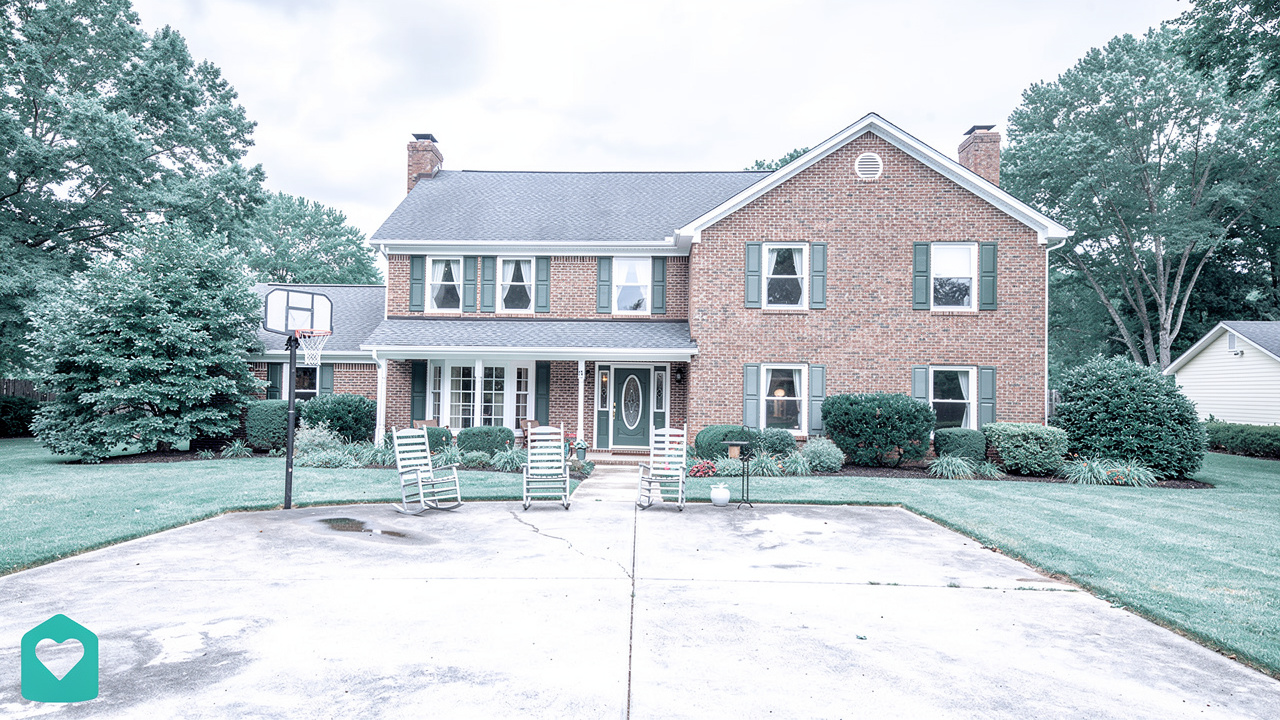
Across neighborhoods like Myers Park, Dilworth, and the older sections of southeast Charlotte, a lot of downsizers are leaving a familiar type of house: a brick ranch or a two-story colonial built between the 1960s and the 1990s, somewhere between 2,400 and 3,800 square feet, on a lot with mature trees and a yard that took a full weekend to maintain in its prime. Many of these homes have four or five bedrooms, a formal dining room that hasn't hosted a dinner in years, and a basement or upstairs level that's become storage rather than living space.
The pressure points tend to be predictable:
- Stairs become a daily negotiation rather than a convenience, especially in split-levels and two-story homes where the primary bedroom sits on the upper floor
- Yards that once meant weekend gardening now mean paying someone else to mow, trim, and mulch
- Aging systems roofs nearing the end of their lifespan, HVAC units original to the house, decades-old plumbing, start requiring maintenance dollars that feel harder to justify for a house with three empty bedrooms
"Smaller" in the Charlotte market usually means one of two things. For homeowners moving into a low-maintenance single-family home or townhome, it often translates to somewhere between 1,400 and 2,000 square feet, generally priced from the high $300,000s to the mid $500,000s depending on the neighborhood. For those moving into a condo, apartment, or a unit within a retirement community, it can mean 900 to 1,400 square feet, with pricing that varies widely based on location and whether the community includes amenities or care services. A move from a 3,500-square-foot family home into a 1,400-square-foot apartment in a walkable neighborhood is common enough in Charlotte that real estate agents who specialize in this transition see it several times a year.
What Prompts A Move
In Charlotte, three drivers show up more often than any others.
The first is the empty nest itself. Families who bought a five-bedroom home to raise kids through Charlotte-Mecklenburg Schools or one of the surrounding county districts often find themselves, a decade or two later, maintaining bedrooms and storage space for children who now live in Atlanta, Raleigh, or further away. The house doesn't change, but the life inside it does, and the mismatch between the two becomes harder to ignore over time.
The second is the cost of maintaining a large, older home on a fixed or reduced income. Property taxes in Mecklenburg County have risen with home values in recent reassessment cycles, and insurance premiums on larger, older homes have climbed as well. Add in higher utility bills for heating and cooling extra square footage, plus routine maintenance on aging roofs and systems, and the math on staying put starts to look different for retirees than it did during their working years.
The third is a shift toward walkability and lifestyle over square footage. Charlotte's uptown-adjacent neighborhoods, South End, Plaza Midwood, NoDa, have grown substantially, offering restaurants, coffee shops, and public transit access that many longtime homeowners in more spread-out parts of the metro simply don't have. For some, the pull toward that kind of daily life, less driving, more walking, becomes as strong a motivator as any financial pressure.
Health and mobility changes round out the picture for a smaller group, particularly those considering a move into an assisted living or memory care setting. These moves tend to happen on a shorter timeline and with less choice involved, which is worth acknowledging even though it's not the most common path.
Where Charlotte Downsizers Go

There isn't one typical destination. Charlotte offers a genuinely wide range of options, and the right one depends on how much independence, maintenance, and social structure someone wants going forward.
Staying in Charlotte, but smaller. Neighborhoods like Plaza Midwood, Dilworth, and South End have become popular landing spots for downsizers who want to trade yard work for walkability. The tradeoff is usually price per square foot: a smaller condo or apartment in these areas can cost nearly as much per square foot as the larger suburban home being sold, and parking or storage space is often more limited than what buyers are used to.
Moving to the suburbs. For those who want lower costs without leaving the region, areas like Matthews, Huntersville, Indian Trail, and Waxhaw offer newer, smaller single-family homes and townhomes at a lower price point than in-town neighborhoods, often with an HOA that handles exterior maintenance. The tradeoff here is usually distance from uptown amenities and, in some cases, from adult children who have settled closer to the city center.
55+ and continuing care communities. Charlotte has an established network of age-restricted and continuing care retirement communities (CCRCs). Sharon Towers, Southminster, and Aldersgate are longstanding CCRCs in the area that allow residents to move from independent living into assisted living or skilled nursing within the same campus as needs change, with entrance fees that can range widely depending on unit size and contract type, often from the low $100,000s into the several hundred thousands, plus a monthly service fee. Plantation Estates in Matthews and similar communities in the surrounding suburbs offer comparable continuum-of-care models at somewhat different price points. Age-restricted 55+ neighborhoods further out, such as those near Indian Trail and Denver, NC, offer a more traditional homeownership model with age-focused social amenities but without the built-in care continuum of a CCRC.
Leaving Charlotte entirely. A meaningful share of downsizers leave the metro area altogether, usually to be closer to adult children in another city or state. This path involves its own layer of logistics, coordinating a long-distance move, researching an unfamiliar market, and often making the decision without having spent much time in the destination.
None of these paths is inherently better than another. They serve different needs, and the right one usually becomes clear only after weighing cost, proximity to family, health considerations, and how much daily independence someone wants to maintain.
Market And Timing In Charlotte
Charlotte's housing market has cooled somewhat from the intense pace of a few years ago, but it remains active, particularly for well-priced homes in established neighborhoods. Homes in walkable, in-demand areas near uptown, South End, and Plaza Midwood tend to move faster than similar properties in outlying suburbs, sometimes going under contract within one to two weeks when priced appropriately. Homes in the $400,000 to $700,000 range, a common bracket for the kind of longtime family homes being sold by downsizers, have generally seen more balanced conditions, with average days on market stretching into the several-week range depending on the season, in line with national data showing the average closed sale now settles only about 1.3% below list price.
Inventory of smaller homes, the 1,400 to 2,000 square-foot single-story or low-maintenance options that many downsizers are looking for, tends to be tighter than inventory of larger homes. Builders in the Charlotte area have added townhomes and smaller-footprint single-family homes in the suburbs, but demand for these unit types often comes from downsizers and first-time buyers alike, which keeps competition steady.
Seasonality follows a fairly typical pattern for the region: spring and early summer tend to bring more listings and more buyer activity, while late fall and winter usually see a quieter market with less competition but also fewer choices. This context is meant only to help set expectations about how long a sale or a search for the right smaller home might take.
What Downsizing Actually Costs

Selling a longtime home and moving into a smaller one involves more moving costs than most people initially budget for. In Mecklenburg County, sellers typically cover North Carolina's excise tax (sometimes called the deed transfer tax), which is $1 per $500 of the sale price, roughly 0.2%. Real estate commissions, closing costs, and minor repairs or staging expenses before listing generally add up to somewhere between 6% and 8% of the sale price, a figure that lines up with national data showing the typical home sale now carries over $20,000 in realtor fees alone.
On the moving side, a local move handled by professional movers typically runs from $1,500 to $4,000 depending on the size of the home and the amount of furniture being relocated, while a long-distance move to be closer to family can run considerably higher. Packing and unpacking services, if hired separately, generally add several hundred to a couple thousand dollars more.
The cost that catches most people off guard is the home cleanout. Decades of accumulated belongings, furniture that won't fit in the new space, and items in attics, basements, and garages that haven't been touched in years all need to go somewhere. A full-service cleanout, covering donation coordination, junk removal, and disposal of hazardous materials like old paint or chemicals, can run anywhere from a few hundred dollars for a light cleanout to several thousand for a full house. Families who plan to handle the sale themselves without an agent should also weigh recent FSBO statistics on typical seller savings, since going it alone doesn't always reduce total costs as much as expected.
Minor repairs and pre-sale prep, fresh paint, carpet cleaning, landscaping touch-ups, small plumbing or electrical fixes, round out the list and can add another 1% to 2% of the home's value if a seller wants the property to show well in a competitive price bracket.
Taxes In North Carolina
Moving within North Carolina changes a homeowner's property tax bill in a fairly direct way: the new home is reassessed at its purchase price (or the county's next assessment cycle), rather than carrying forward the assessed value of the old home. There is no portability provision in North Carolina similar to what some other states offer, so a homeowner moving from a highly appreciated longtime home into a smaller, newer purchase may see their tax basis reset closer to current market value, sometimes resulting in a comparable or even higher tax bill despite the smaller square footage, depending on the neighborhood.
North Carolina does offer relief programs worth knowing about:
- Elderly or Disabled Property Tax Homestead Exclusion reduces the taxable value of a permanent residence for qualifying homeowners aged 65 or older (or those who are totally and permanently disabled) who meet certain income limits, set annually by the state
- Circuit Breaker Tax Deferment for qualifying seniors with lower incomes, caps property taxes as a percentage of income and defers the remainder as a lien on the home
Capital gains from the sale of a longtime home are another consideration. Homeowners who have lived in the property as their primary residence for at least two of the last five years can typically exclude up to $250,000 of gain if filing individually, or $500,000 if filing jointly, under federal rules. Any gain beyond that exclusion is generally taxed as ordinary income at North Carolina's flat state income tax rate, in addition to federal capital gains tax. Because the numbers vary based on how long a home has been owned, its cost basis, and individual filing status, this is an area where speaking with a North Carolina-licensed tax professional or CPA before listing a home makes far more sense than relying on general guidance.
The Harder Part
The logistics of downsizing, the packing, the paperwork, the moving trucks, are rarely what makes the process difficult. What makes it hard is everything underneath: the identity tied up in a home where kids were raised, the grief of closing a chapter that isn't coming back, and the simple fact that two people in the same household often aren't ready at the same time. One spouse may have been mentally packed for months while the other still can't imagine walking out the front door for the last time. Adult children add their own layer of complexity, sometimes resistant to seeing childhood belongings go, sometimes surprisingly unattached to items their parents assumed were sacred.
There isn't a service or a professional who resolves this part. What helps is naming it honestly, within the household and with family, rather than treating the emotional weight as a problem to be solved on the way to a moving date. Giving both partners room to move at different paces, having direct conversations with adult children about what they actually want (rather than guessing), and accepting that some sadness is simply part of a meaningful transition all tend to make the process feel less like a loss and more like a passage.
Belongings

Once a household is ready to sort through decades of possessions, a rough timeline helps prevent the process from stalling out. Most families find that starting three to four months before a planned move date gives enough time to sort without rushing, though this can compress significantly once momentum builds.
Adult children are frequently far less attached to childhood items, school projects, trophies, old furniture, than their parents expect, so it's worth asking directly rather than assuming what should be saved. For everything else, a few well-defined paths tend to cover most situations:
- Estate sale for a full household of furniture, décor, and collectibles
- Consignment for higher-value furniture, art, or jewelry
- Donation pickup services for gently used furniture and household goods
- Junk removal for anything with no resale or donation value
- Direct family transfer for sentimental or high-value heirlooms
- Digital preservation (photographing or scanning) for sentimental items too bulky to keep
A simple sorting checklist can keep momentum going room by room:
- Does anyone in the household currently use this item?
- Would a photo preserve the memory as well as the object itself?
- Is this a duplicate of something else already kept?
- Would a specific family member want this?
Kinds Of Help Available

Charlotte has a reasonably deep bench of professionals who specialize in exactly this kind of transition, and it's worth knowing what each one actually does before deciding who, if anyone, to bring in.
Type of Help
What They Do
Best For
Senior Move Managers (NASMM)
Coordinate sorting, space planning, packing, move-day oversight, unpacking
Moves into assisted living or memory care
Senior-focused agents (SRES)
Understand pacing and pricing for longtime family homes
Selling in the Charlotte market
Professional organizers
Focus on decluttering and sorting
Households planning to age in place
Senior relocation movers
Extra care with physical handling
The move itself
NC-licensed tax professional
Walks through property tax and capital gains implications
Financial planning before listing
Senior Move Managers, often certified through the National Association of Senior Move Managers (NASMM), coordinate the full arc of a move: sorting, space planning for the new home, packing, move-day oversight, and unpacking, with particular experience handling moves into assisted living or memory care settings that have their own move-in requirements. Senior-focused real estate agents, sometimes holding the Seniors Real Estate Specialist (SRES) designation, understand the particular pacing and sensitivities involved in selling a longtime family home and can help set realistic pricing and timing expectations for the Charlotte market. Professional organizers focus more narrowly on the decluttering and sorting phase, which is useful for households that plan to age in place and simply want to reduce clutter and improve safety without a move at all. Movers who specialize in senior relocations bring extra care to the physical handling of the move itself, and a North Carolina-licensed tax professional can walk through the property tax and capital gains implications specific to a household's situation before any paperwork is signed.
You may find it helpful to speak with one or more of these professionals early in the process, even before a firm decision has been made, simply to understand what each type of support actually involves and what it might cost. Downsizing Insights exists to help people compare these options and understand the process in plain terms, without any obligation to move forward with a particular path.
Frequently Asked Questions
Is now a good time to downsize in Charlotte?
There's no single answer to that. It depends on your home's condition, your neighborhood's current demand, your health and readiness, and your family's timeline. The market context in this guide is meant to inform that decision, not make it for you.
How much smaller do most Charlotte downsizers go?
Many households move from homes in the 2,800 to 3,800 square-foot range into homes or apartments between 1,400 and 2,000 square feet, though the right size depends heavily on lifestyle, storage needs, and whether a spouse or family member will eventually join the household.
Do I need to sell my Charlotte home before buying a smaller one?
Not necessarily. Some households prefer to sell first and rent temporarily while they search for the right next home, which removes the pressure of coordinating two closings at once, but it does mean a temporary move. Others secure a new home first, particularly if their current home is expected to sell quickly given local demand.
What neighborhoods in Charlotte are popular for downsizing without leaving the city?
Plaza Midwood, Dilworth, South End, and NoDa are commonly mentioned by downsizers who want walkability and a smaller footprint without leaving the metro area, though each comes with a different price point and density level worth comparing directly.
How does moving within North Carolina affect my property taxes?
Your new home will generally be taxed based on its own assessed value rather than carrying over the tax basis of your previous home, since North Carolina doesn't offer assessment portability. Seniors may qualify for the state's Elderly or Disabled Property Tax Homestead Exclusion or the Circuit Breaker Tax Deferment program, depending on income and age.
Should I hire a Senior Move Manager or handle the move myself in Charlotte?
That depends on the household's health, timeline, and how much support family members can provide. A Senior Move Manager can be worth the cost for households managing a move into assisted living or memory care, or those without nearby family to help with sorting and logistics.
What happens to items my adult children don't want?
Estate sale companies, consignment shops, and donation pickup services throughout the Charlotte area handle most of what's left after family members have chosen what they want. Junk removal services can clear out anything with no resale or donation value.
Will I owe capital gains tax on selling my longtime Charlotte home?
Possibly, though many homeowners qualify for a federal exclusion of up to $250,000 (or $500,000 for joint filers) on the sale of a primary residence. A North Carolina tax professional can review your specific cost basis and ownership history to determine your actual exposure.
Getting Started
None of this requires a decision today. Reviewing your home's likely value, requesting a rough moving estimate, or having an initial conversation with a senior-focused agent or move manager are all ways to gather information without committing to a sale or a moving date.
Think of any estimate you get as a number to plan around, not a step you have to follow through on.
Downsizing Insights is here to help you understand the options at your own pace, whenever you're ready to look closer.
Take your next step forward
You've learned the essentials. Now get the tools to move with confidence and clarity.
.jpg)