Decluttering Sentimental Items With Kindness
Introduction
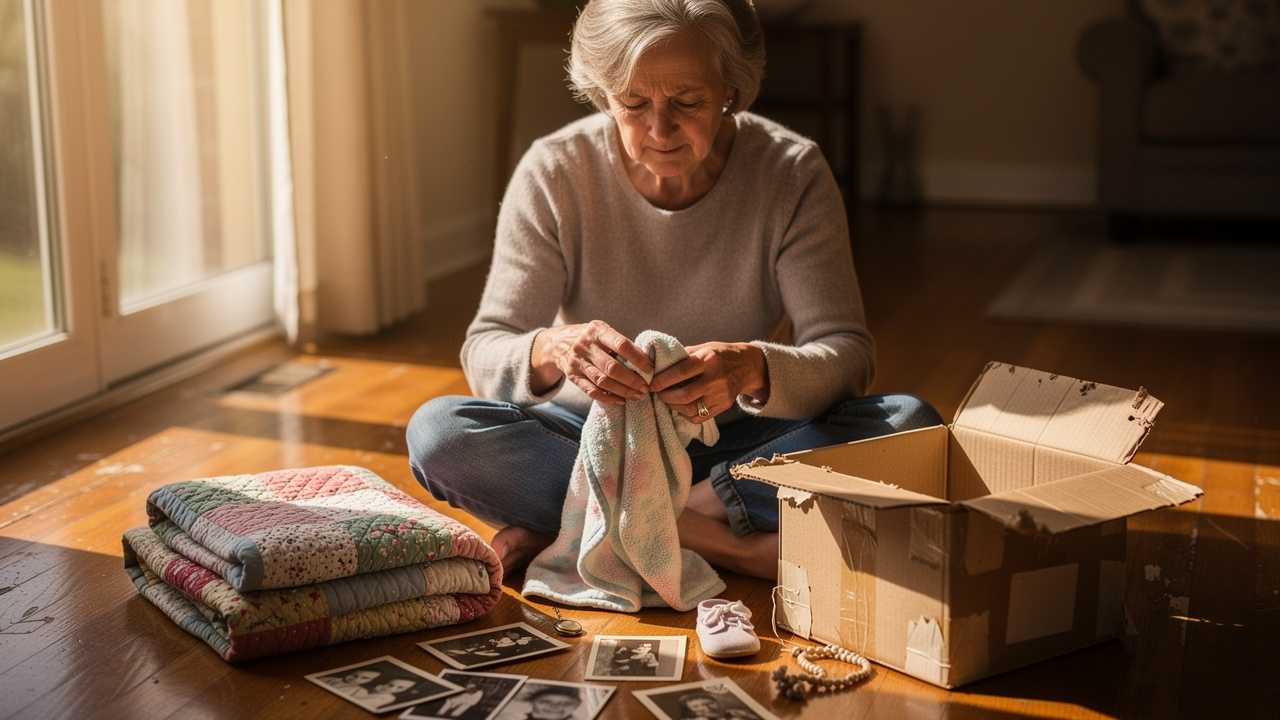
The box looks harmless at first. A stack of old school photos, a faded baby blanket, a bundle of programs from graduations and recitals. A hand reaches in to start decluttering sentimental items, and then stops, frozen between the wish for a lighter home and the fear of losing something important.
For many of us, sorting through sentimental clutter is the hardest part of downsizing. Packing up a kitchen or garage can feel straightforward compared with deciding what to keep from a lifetime of birthdays, holidays, and ordinary days. Guilt, grief, love, and the fear of forgetting can all show up at once and make even one cardboard box feel impossible.
There is something gentle and true at the center of this work: letting go of an object does not mean letting go of the person, the memory, or the love behind it. When we treat decluttering sentimental items as an act of care instead of punishment, the process becomes softer and more manageable.
In this article, we’ll walk through why sentimental items feel so heavy, how to prepare your heart and your home, and how to keep the memories without keeping everything. We’ll also look at kind ways to rehome belongings so they continue to matter. At Downsizing Insights, we offer clear roadmaps, a Downsizing Readiness Self‑Assessment, and compassionate local support, so no one has to face this season alone.
Key Takeaways
Sentimental items carry emotional weight, and that is normal. When we name the feelings that come up during decluttering sentimental items, we drop the shame and gain steady ground for kind choices. This calmer mindset leads to better decisions.
A simple plan makes the work less overwhelming. When we define what enough looks like and start with small steps, decluttering sentimental items feels more like steady progress and less like chaos. A bit of structure brings comfort.
Memories can live in many forms. Digital albums, small memory boxes, written stories, and thoughtful rehoming allow us to honor the past without keeping every object. With guidance from Downsizing Insights, these steps become practical, loving acts rather than painful goodbyes.
Why Decluttering Sentimental Items Feels So Hard

When we talk about decluttering sentimental items, we’re not really talking about boxes and shelves. We’re talking about the people we love, the roles we’ve held, and the chapters that shaped us. A chipped mug from college or a stack of kids’ drawings can feel far heavier than their size suggests.
Most homes hold familiar groups of meaningful things:
- Family heirlooms such as quilts, rings, or a dining table that held decades of meals
- Childhood keepsakes, sports trophies, playbills, or the dress worn at a wedding
- Photo albums, yearbooks, letters, and collections that once brought joy and still carry deep stories
As British designer William Morris advised:
"Have nothing in your houses that you do not know to be useful, or believe to be beautiful."
— William Morris
That idea sounds simple, but our feelings often complicate it. Research on The Mental Health Benefits of decluttering confirms that several powerful emotions can make decluttering sentimental items feel almost impossible:
- Fear of forgetting. A quiet thought appears: if the object goes, the memory will fade.
- Guilt. This can be especially strong with gifts or belongings from a loved one who has died. It can feel disloyal to give them away.
- Identity. A uniform, a degree, or a box of work awards can seem linked to who we are or who we were. Parting with them can feel like erasing a chapter of ourselves.
- Exhaustion. After decades in one home, the number of items can be huge. The thought of hundreds of small decisions in a crowded attic or basement can lead to complete avoidance.
At Downsizing Insights, we name these feelings out loud so people see that they are not weak or disorganized — a position supported by studies exploring moderators and the mediating role of home beauty, which link home clutter directly to reduced mental well-being. They are human. When we remember that love and memory live in us rather than in objects, decluttering sentimental items can shift from an attack on the past to an act of respect for the future.
How To Prepare Yourself Before You Begin
Good results with decluttering sentimental items start long before the first box opens. When we rush, we tend to keep almost everything or toss things we later miss. When we move slowly and plan, we create space with far less regret.
We usually suggest beginning three to six months before a move or major change. That window gives time for feelings to surface and settle, and it leaves room for family talks. It also means there is room on the calendar for breaks, which are just as important as the work itself.
Here are practical ways to get ready:
Give yourself time that feels kind. Short sessions work well, such as twenty to thirty minutes a few times a week, instead of a full weekend that leaves everyone drained. This steady rhythm keeps decluttering sentimental items from becoming a crisis and allows memories to be shared along the way.
Decide what “enough” means before you start. You might choose one memory box for each person or one shelf for framed photos and small treasures. When those limits are clear, decluttering sentimental items turns into choosing the best of the best instead of arguing over every single object.
Begin with easier spaces to build confidence. A bathroom cabinet, linen closet, or kitchen drawer teaches the skills of sorting and deciding without the same emotional weight. After a few small wins, decluttering sentimental items feels less like a mountain and more like a path with clear steps.
Invite support that feels safe. A kind friend, adult child, or neutral helper can listen to stories, carry boxes, and offer gentle questions when decisions feel stuck. Simply not being alone in the room often makes decluttering sentimental items less overwhelming.
Use a simple checkup before big decisions. The Downsizing Readiness Self‑Assessment helps people think through emotional, practical, and financial questions ahead of time. With that reflection in place, decluttering sentimental items becomes part of a larger, thoughtful plan instead of a rushed reaction.
Set a few ground rules with family. For example, agree that no one will take items “out of guilt,” and that it’s okay to say no. Clear expectations reduce conflict and make it easier to respect everyone’s limits.
Kind Ways To Preserve Memories Without Keeping Everything

The heart of decluttering sentimental items is this idea: the memory lives in the mind, not in the object — a philosophy echoed in research Goodbye materialism: exploring antecedents of minimalism, which finds that moving away from attachment to possessions is linked to greater well-being among millennials. Once we trust that truth, we can let our creativity help us keep what matters most in forms that fit a smaller, calmer home.
Many people think the only options are keeping or tossing. In our work at Downsizing Insights, we see many gentle choices in between. These options protect faces, stories, and handwriting while lightening the organizing small spaces that now feel crowded. They also give families new ways to enjoy memories instead of hiding them in storage.
Some thoughtful approaches include:
Use digital albums and photo books. Old photos, letters, and children’s artwork can be scanned with a phone or small scanner and saved on a computer or cloud account.
- Create folders by year, event, or person to make them easy to find.
- Favorite images can be printed in slim photo books that sit on a coffee table instead of in heavy bins.
This method lets decluttering sentimental items keep the heart of the memory while freeing cabinets and closets.
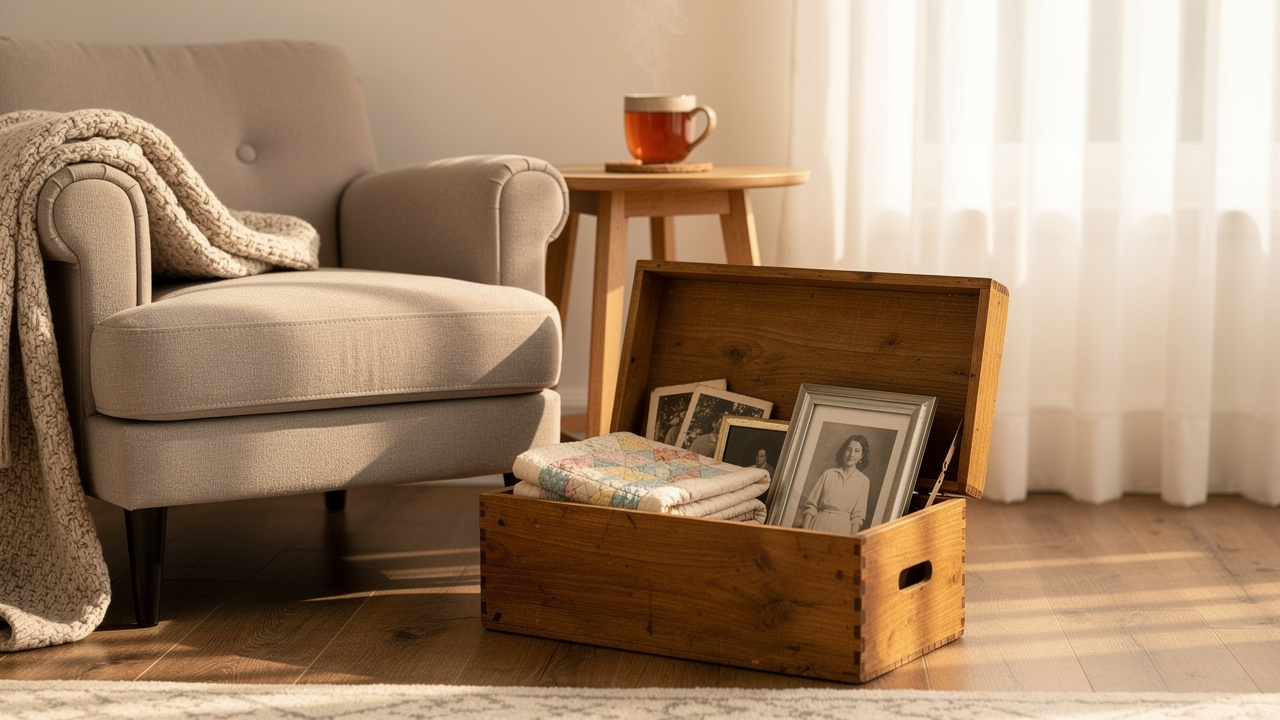
Create small, clear memory boxes. Choose one or two modestly sized boxes for each person or household story and fill them only with the most irreplaceable items. When the box is full, it becomes a gentle limit that guides further choices. Decluttering sentimental items then focuses on what earns a place in the box, not on what must be thrown away.
Capture the story in words or audio. Before an item leaves the home, write down what it meant, who used it, and when it mattered most. Some families record simple audio or video clips where someone tells the story out loud.
These recorded memories often turn out to be more powerful than the object itself, especially when several voices share their part. A grandchild may treasure hearing a grandparent’s voice far more than another box of things.Salvage and repurpose favorite pieces.
- A single square from a worn quilt can be framed and hung on the wall, while the rest of the fabric is retired.
- A teacup can become a small planter, and an old wooden chair can be refinished to suit a new space.
This approach lets decluttering sentimental items honor the past while fitting the way we live now.
Pass select treasures along. Holiday dishes, a well‑loved recipe box, or a piece of jewelry can be offered to children, grandchildren, or close friends who will truly use them. When someone we love chooses an item and gives it new life, decluttering sentimental items begins to feel like sharing rather than loss.
Create “highlight reels.” Instead of keeping every school project or birthday card, pick one or two from each year and combine them into a single binder or scrapbook. The collection still tells the story, but in a way that fits on one shelf.
How To Rehome Sentimental Items With Intention

Once we decide what stays, the next question is where the rest should go. This stage of decluttering sentimental items can stir fresh feelings, yet it can also bring real comfort. When we choose thoughtful new homes, the act of letting go starts to feel like an act of care.
We often remind clients that the person who owned or gave the item wanted joy, not burden. Passing things forward in kind ways keeps that spirit alive. It also means fewer boxes for children to face during a hard season later on.
Some gentle ways to rehome belongings include:
Offer items to family and friends first. Think about who might truly enjoy a certain painting, set of tools, or set of dishes, and invite them to accept or decline with no pressure at all. When they say yes with real interest, decluttering sentimental items turns into a shared memory instead of a private goodbye. You might even take a quick photo of the handoff to remember the moment.
Donate where the item can shine. Sheet music can help a school band, vintage clothes can serve a theater group, and books can comfort people in a hospital or nursing home. When we match each item with a place that needs it, decluttering sentimental items begins to feel useful and kind.
Sell what has clear value. Antiques, fine jewelry, and rare collections can often be sold through a local shop, estate sale company, or trusted online market. The money can support moving costs, home updates, or simple treats in the next chapter. Knowing an enthusiastic buyer will care for the item can ease the whole process of decluttering sentimental items.
Recycle and dispose with care. Some things are broken beyond repair, stained, or unsafe, and keeping them only adds stress. Textile programs, e‑waste drop‑offs, and local recycling centers can handle many of these items in a responsible way. Even this quiet step is part of decluttering sentimental items with respect for the home and the people who live in it.
Say a brief goodbye ritual. For especially meaningful objects that cannot be kept, sold, or given away, some people find comfort in a small ritual: a few words of thanks, a photo, or a short note about what the item represented. Then it becomes a little easier to let it go.
Conclusion

Sorting through a lifetime of memories is hard work. Anyone who faces decluttering sentimental items is doing something brave, whether the reason is an empty nest, retirement, a move to a new community, or helping aging parents. It is normal to feel tired and tender along the way.
Through this process, one truth keeps us steady: the love, the stories, and the lessons do not live in boxes or bins. They live in conversations, in photos we can hold, and in the way we show up for each other now. Decluttering sentimental items is not about erasing the past. It is about giving the next stage of life room to breathe.
As organizing consultant Marie Kondo has said:
"The space in which we live should be for the person we are becoming now, not for the person we were in the past."
— Marie Kondo
On the other side of this work is a home that feels more peaceful and easier to care for, with space for visits, hobbies, and rest. We encourage taking it one step, one shelf, and one box at a time. At Downsizing Insights, our personalized roadmaps, readiness assessments, and gentle guidance are here to walk beside anyone who wants that support. With thoughtful choices and steady help, decluttering sentimental items can become a kind step toward a future that feels lighter and more free.
FAQs
Where do I even start when decluttering sentimental items feels overwhelming?
Start with a single, small group of things instead of an entire attic. Pick one box or one drawer and set a timer for twenty to thirty minutes. Begin with items that are slightly sentimental but not the most painful. Our room‑by‑room approach and Downsizing Readiness Self‑Assessment give downsizing checklist for decluttering sentimental items without panic.
How do I let go of sentimental items without feeling guilty?
Begin by separating the person from the possession and reminding yourself that love is not stored in objects. Then ask what that person would want for your life now, which is almost always peace and freedom. When you donate or gift with care and record the stories in writing or audio, decluttering sentimental items becomes a way to honor rather than betray those memories.
What should I do with sentimental items I am not ready to decide on yet?
Use one small box for undecided pieces and choose a clear review date, such as sixty days from now. Take a photo of each item so the memory is safe no matter what you choose later. Try not to let that box grow without limit. When people work with our Downsizing Insights tools, including the readiness assessment, they often find fresh clarity about decluttering sentimental items they once thought they could never face.
Take your next step forward
You've learned the essentials. Now get the tools to move with confidence and clarity.
.jpg)