
Donating Items When Downsizing Without Regret

Introduction
Donating items when downsizing often feels heavier than packing boxes or signing papers. The task looks simple on a checklist, yet emotions surface fast. Suddenly each object feels like a chapter of life, not just an item.
That mix of memories and pressure can stall the whole move. People delay decisions, argue with themselves, or shut the door on certain rooms. The good news is that this is normal and not a sign that you are doing it wrong.
At its core, donating items when downsizing means choosing which belongings will keep serving you and which can start helping someone else. This guide from Downsizing Insights walks through why letting go feels hard, how to sort at a gentle pace, where donations can go, and what to do with sentimental pieces that feel almost impossible to release. One careful step at a time, you can move forward without feeling pushed.
Key Takeaways
Donating can feel harder than expected because belongings hold memories, identity, and years of family life, not just practical use. Naming that weight often brings some relief and reduces the self-blame that many people quietly carry.
A simple four-category system and short sorting sessions protect your energy while still moving things along. Kind rules, not harsh pressure, guide what stays, what is donated, what is sold, and what is discarded.
Matching items with the right donation centers and community groups, from Goodwill or the Salvation Army to animal shelters or local schools, turns clutter into community support. Personal networks and online groups can rehome pieces in ways that feel personal and meaningful.
Why Donating Items When Downsizing Feels So Hard
Donating items when downsizing feels so hard because belongings often stand in for stories, milestones, and roles you have held. The object might be small, but the memory around it is large. When a house holds decades of life, every closet can feel like a family album.
Psychologists have linked crowded, cluttered spaces with higher stress levels, especially for caregivers and parents, as research from the UCLA Center on Everyday Lives of Families shows. Here is the twist: stuff can feel heavy when it is present, yet the idea of letting it go can feel just as heavy. That tension alone is enough to keep many people stuck.
"Clutter is not just the stuff on your floor, it's anything that stands between you and the life you want to be living." — Peter Walsh, organizational expert
For empty nesters and retirees, giving away a box of toys or sports gear can feel like saying goodbye to a stage of parenting. Seniors may see their dishes or tools as proof of how they took care of others. According to AARP, many older adults say that sorting through belongings is the hardest part of right-sizing a home, not the move itself.
Family dynamics add another layer. People worry about upsetting adult children, or they feel guilty passing on decision-making. This is where a calmer frame helps. Downsizing Insights treats readiness as something that sits on a sliding scale, not a switch you flip.
The Downsizing Readiness Self-Assessment invites each person to check in with their emotional and practical energy before tackling big decisions. Instead of pushing you to clear the house on a deadline, it shows where you feel steady and where you need more time. That simple check-in often makes donating items when downsizing feel less like a test and more like a series of human-sized choices.
How to Sort Through Your Belongings Without Burning Out
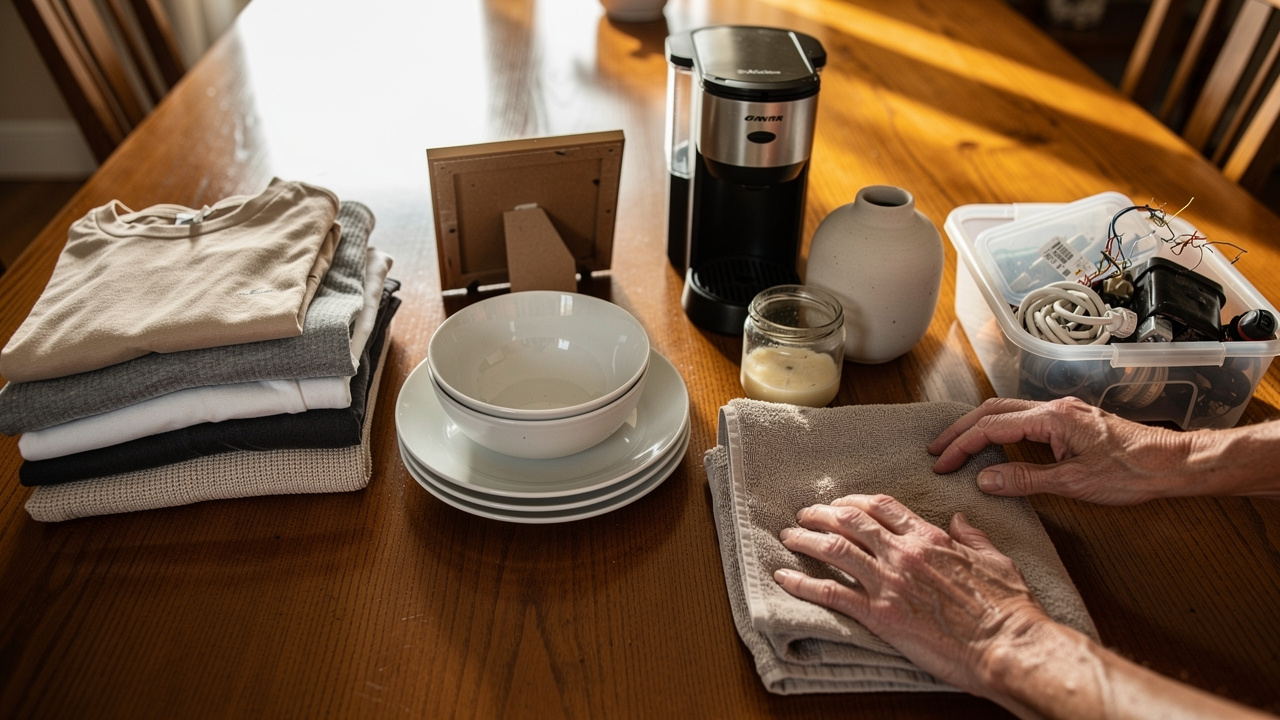
Sorting through belongings without burning out starts with a simple plan and small, steady blocks of time. Donating items when downsizing works better when you give every object a clear path instead of deciding the same thing over and over. A loose structure helps your mind rest between choices.
A four-category approach is one of the gentlest ways to do this. Research from the American Psychological Association notes that decision fatigue builds as the number of open choices grows. Clear buckets reduce that load because once you decide where something goes, the decision is finished.
Here is one way to use the four categories in each room:
Keep items when they support daily life now or hold rare, deep meaning that still fits your next home. Ask simple questions such as whether you have used the item in the past year and whether you would miss it in the coming season. Aim for favorite versions rather than every version, so the best dishes, towels, or tools rise to the top. When in doubt, set a few items aside and revisit them near the end of that room.
Donate items that still work and could clearly serve someone else. Extra pans, duplicate linens, decor that no longer fits your style, and outgrown clothes often fit here. According to the National Association of Realtors, many sellers are pleasantly surprised at how much lighter their homes feel after this kind of release. The key is to box donation items right away and move them toward the door so they do not wander back.
Tip: Label donation boxes by room or category. It makes drop-off easier and helps you see real progress as boxes fill.
Sell items only when they are worth the time and effort, such as quality furniture, jewelry, or collections. Decide on a clear deadline for listings on places like Facebook Marketplace or eBay, then shift anything unsold into the donation group. That way, selling supports donating items when downsizing instead of slowing the whole process.
Discard items that are broken, stained, or unsafe to pass along. Old cleaning chemicals, frayed cords, and damaged cookware belong in trash or special disposal programs, not donation bins. Your future self will not miss these.
Sentimental items need softer handling. Downsizing Insights often suggests preserving the memory instead of every object. You might photograph a child’s artwork, write down the story behind a chipped mug, or keep one quilt square rather than a full worn blanket. Gifting selected heirlooms directly to family members who will use and love them lets those stories continue without filling your next home.
Starting Small: Where to Begin When Everything Feels Significant
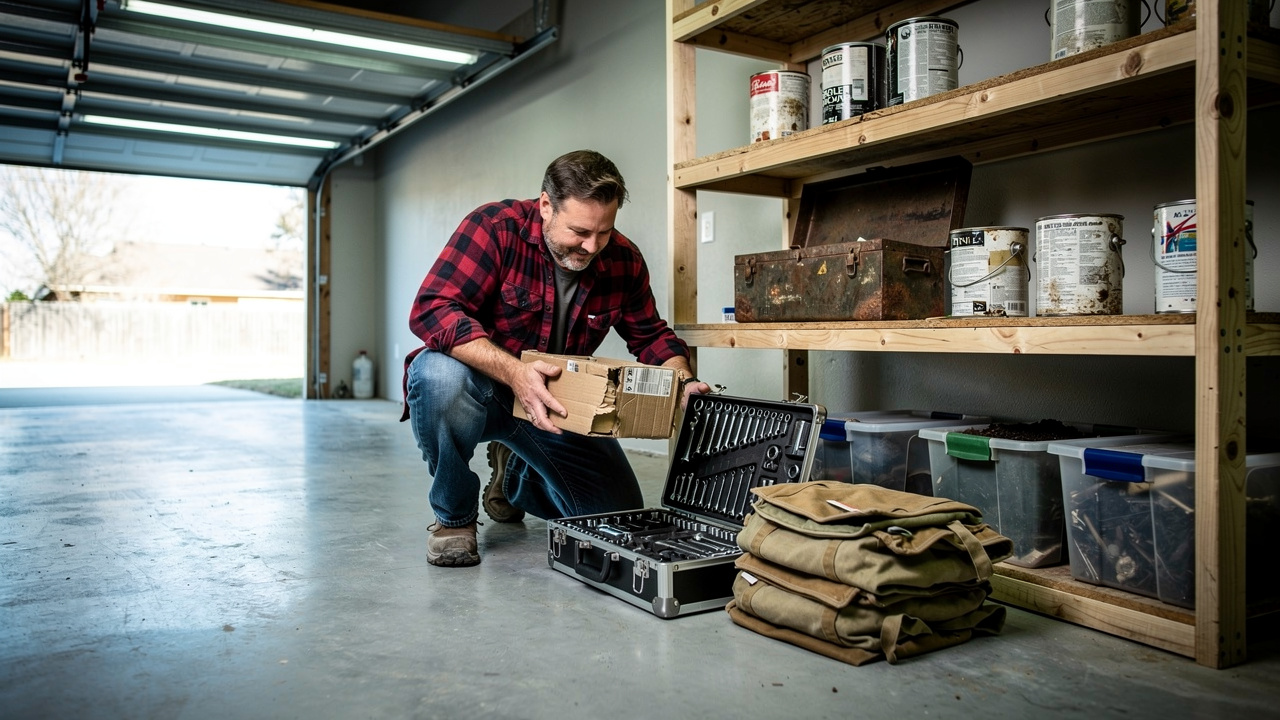
Starting small works well when every room feels loaded with meaning. Instead of jumping straight into the bedroom or the box of baby clothes, choose spaces with low emotional weight so you can warm up. That way, you practice your sorting muscles before you touch the tender things.
Good starter spots tend to be more practical than personal, such as:
A garage shelf with old paint or unused tools
A linen closet with extra towels and sheets
A crowded junk drawer that rarely holds center-stage memories
Clearing one of these areas in a short session builds what Downsizing Insights likes to call decluttering momentum.
Here is the point: momentum does not mean rushing. Short, focused sessions with full breaks in between protect your energy and your back. Pacing is not avoidance here. It is a healthy way to respect both the size of the task and the feelings tied to it.
Where to Donate Items When Downsizing: A Practical Overview
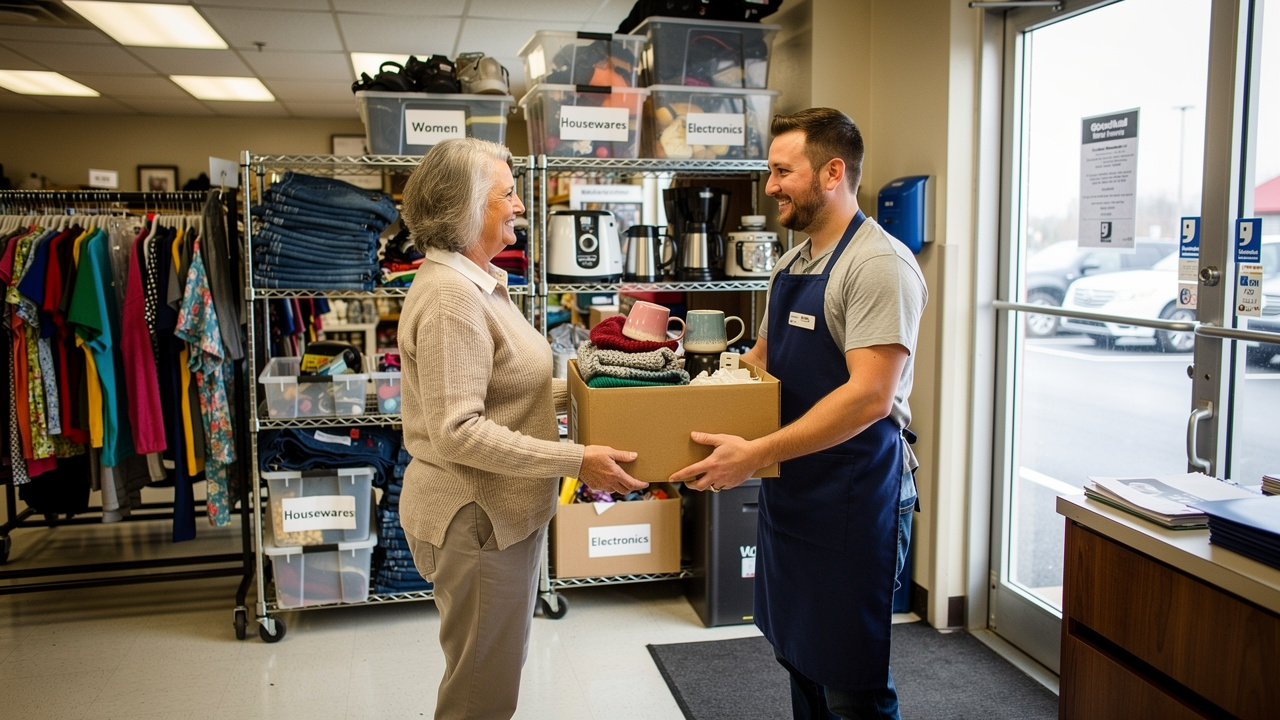
When you are donating items when downsizing, matching each type of item with the right place keeps the process clear. Different organizations are set up to use different kinds of goods well. Knowing those matches turns a vague wish to help into concrete action.
Large national charities cover a wide range of everyday items. Groups such as Goodwill and The Salvation Army accept clothing, housewares, small appliances, and more through their thrift stores. Many locations offer free pickup for furniture or big loads, which is especially helpful if driving and lifting are harder now. Scheduling a pickup a week or two ahead is wise, since these services fill quickly in busy real estate seasons, as noted by Goodwill Industries International.
Specialized local groups can make even more direct use of certain donations:
Animal shelters and humane societies often need clean towels, blankets, and pet supplies. Those worn bath sheets that are too shabby for guests can become bedding for animals waiting for homes. Local shelters listed through ASPCA usually share wish lists online, which makes it easy to see what will help most. Turning old linens into comfort for animals can feel strangely comforting in return.
Career support groups and thrift programs focused on job seekers welcome professional clothing, handbags, and briefcases. An outfit that once carried you through interviews may now help someone else face theirs with more confidence. Some areas have Dress for Success affiliates or similar programs that focus on this exact need. Schools and adult education centers may also accept items for clothing closets that support students.
Community organizations like churches, community centers, libraries, and schools often want very specific items. Libraries and Friends of the Library groups host book sales that support reading programs. Habitat for Humanity ReStores accept furniture, lighting, and building materials, turning them into funding for housing projects, as described by Habitat for Humanity. Art teachers may be thrilled to receive extra craft supplies or fabric.
Personal networks matter just as much. Adult children furnishing first apartments might be glad to receive an extra set of dishes, a couch, or tools. Neighbors may know families who can use kids' clothing or sports gear. Online groups such as Buy Nothing, Freecycle, and local Facebook community pages help items move quickly into nearby homes.
For donations to registered charities, ask for a receipt and keep a simple list of what you gave. The IRS explains that donations to qualified 501(c)(3) groups can be tax deductible when you itemize, so basic records can help later.
How to Handle Items You Cannot Bring Yourself to Let Go Of

Handling items you cannot bring yourself to let go of begins with admitting that they form their own special group. These pieces carry stronger emotions than ordinary clutter, which is why they stall progress. Trying to push through them too fast often backfires.
Start by separating these hard items into a small, labeled section instead of scattering them through the house. Think of this as the gentle pile, not the problem pile. You might include your wedding china, a parent's armchair, or bins of childhood artwork. According to Pew Research Center, more adults now live in multigenerational households, which means heirlooms often touch several sets of feelings, not just your own.
Not every decision has to be final right now. Downsizing Insights often suggests creating a short-term holding plan for deeply meaningful pieces. That could mean using a small storage unit for one year or keeping a single shelf or trunk for items that still need time. The point is simple: you keep your momentum on the rest of the house while giving your heart space to catch up.
When you do feel ready to act, creative options help the memories live on:
Resize the item. Turn a few parts of a larger item into something smaller and easier to keep. A teacup from a full china set can become a bedside catchall. A strip from a favorite shirt can join a memory quilt. This keeps the story while reducing the space.
Limit memory boxes. Hold yourself to one or two memory boxes per person or life chapter. Choose the letters, photos, and objects that best tell the story, then let the rest go. Downsizing Insights offers Downsizing Checklists and Personal Roadmaps that walk through decisions like these in small, concrete steps, so you always know the next action, not every action.
Pass items to new caretakers. Gently hand off meaningful items to people who will use them now. Holiday dishes can move to the adult child who hosts gatherings. Tools can pass to the grandchild who loves fixing things. Seeing an item in active use often feels better than seeing it sit on your own shelf.
If you notice rising dread or sadness around a particular box or room, that is a sign to pause, not a sign of failure. A short break, a talk with a friend, or a look at your Readiness Self-Assessment can reset the process so that donating items when downsizing stays humane.
Laat de Afsluiting Zijn | Suggested Concluding Phrase: "One Item at a Time Is Enough"

One item at a time really is enough when you are donating items when downsizing. Homes gather years of living, so it makes sense that letting go takes more than a weekend. The pace of your heart matters just as much as the pace of the moving truck.
Each bag of donations, each memory box, and each decision to pause instead of push is part of the work. Downsizing Insights exists to steady that work, not rush it. The Readiness Self-Assessment, Downsizing Checklists, and Personal Roadmaps give you company and structure whenever you want it.
So if the house still feels full, remember this closing thought: one shelf cleared with care is better than a whole house rushed with regret.
Frequently Asked Questions
Question: What Items Do Most Donation Centers Refuse to Accept?
Most donation centers refuse heavily stained or damaged items, broken electronics, mattresses, and car seats. They also turn away hazardous items such as paint, chemicals, and batteries, which must go to special disposal sites. Policies vary, so always call or check the charity’s website before loading your car.
Question: How Do I Donate Large Furniture When I Can't Transport It Myself?
You can donate large furniture by booking a pickup with charities like Goodwill or The Salvation Army, which often collect big items at home. Schedule at least one to two weeks ahead, especially in busy moving seasons. Local Buy Nothing groups or Facebook communities may also connect you with neighbors who will pick items up.
Question: Is It Worth Selling Items Instead of Donating Them?
Selling can be worth it for higher value items such as quality furniture, art, or jewelry. Set a clear deadline for listings online, then donate anything that has not sold by that date. For everyday goods, many people find that straight donation is faster and less tiring than managing sales.
Question: How Do I Help an Aging Parent Donate Belongings Without Creating Conflict?
Start by asking about the memories behind items before suggesting donation, so your parent feels heard. Downsizing Insights recommends that each family member complete the Readiness Self-Assessment separately, then compare results to see where pace and priorities differ. Shape the plan around your parent’s emotional readiness more than the calendar whenever possible.
Question: Can I Get a Tax Deduction for Donated Items During a Downsize?
Yes, donations to qualified 501(c)(3) charities are usually tax deductible when you itemize. Ask for a receipt every time you donate and keep a written list of major items with rough fair-market values. The IRS website explains current rules in plain language and can guide you at tax time.
Take your next step forward
You've learned the essentials. Now get the tools to move with confidence and clarity.
.jpg)