
Supporting Parents Through Downsizing With Care

Introduction
Standing in a childhood living room, looking at every shelf and photo, supporting parents through downsizing can feel like trying to move an entire life, not just a house — and when children leave home, many parents find themselves rethinking not only where they live, but how they live. The decision touches who they are, not only where they live. It also stirs up your own memories, worries, and hopes for what comes next.
This is why helping parents downsize is so heavy. It is not just a to‑do list or a weekend project. It is love, safety, money, health, and identity all wrapped together. Things move slowly, then suddenly feel urgent. There are no perfect words and no perfect timing, only small, honest steps.
This article is here to steady those steps. You will learn:
- how to start the first conversations without turning them into a planning meeting
- how to shape a plan around your parent rather than a deadline
- how to handle belongings as stories instead of junk
- how to know when outside help might ease the strain
Along the way, you will see how Downsizing Insights can give you structure, language, and expert support while you stay in the role that matters most: the caring child who is doing the best they can.
As one adult child said after helping her parents move, “I expected the hard part to be the boxes. It was the stories attached to them.”
Key Takeaways
Start conversations early and gently. Early talks about downsizing give your parent time to adjust, think, and imagine, instead of reacting in a crisis. The first talks do not need decisions. They only need honesty and space.
Let your parent set the pace. A slower, parent‑led rhythm protects both the relationship and their sense of control. Small, flexible steps usually work better than a tight countdown that leaves everyone tense and worn out.
Use structure and support tools. You do not have to figure this out alone. Downsizing Insights offers tools like a Readiness Self Assessment and free expert calls, so your family can move through this change with more clarity and less pressure.
How To Start The Conversation Without Creating Pressure

The very first talk about moving or letting go of a long‑time home can feel risky. You might worry that raising it will upset your parent or make them think you are trying to take charge. Starting gently, and starting before a health scare or money problem forces the issue, gives everyone room to breathe.
It helps to think of the first conversation as opening a side door, not calling a formal family meeting. You are not there to make choices or draw a timeline. You are simply naming that supporting parents through downsizing may be part of the future and that you want to understand how they feel about it. When the goal is connection, not decisions, the pressure drops.
Tone matters as much as the words. Using “I” statements keeps the focus on your care, not on their mistakes. You might say that you have been thinking about how to keep things easy for them over the next ten years, and you want their ideas. If they push back, that is normal. Resistance often softens once they see you are not tying the idea to a move next month.
You can also lower the stakes by connecting the topic to something outside your family. You might mention a friend whose parents chose a ranch‑style home, or a neighbor who moved closer to grandkids. You can ask what kind of place your parent would want if they ever chose to move. Questions like this invite daydreaming more than defense.
Here are a few simple openers that feel like conversation, not a demand:
- “I’ve been thinking about how to keep things simple for you over the next few years. What have you been thinking about the house?”
- “If you ever decided you wanted a different place, what kind of home sounds comfortable to you?”
- “Some of my friends’ parents are starting to sort through their homes. How do you feel when you hear about that?”
Your main job in that first round is to listen more than you talk. Let your parent share fears about losing independence, worries about money, or anger about aging. When you reflect their words back and do not rush in with fixes, they feel less alone.
The Downsizing Insights Readiness Self Assessment can help here as well. You and your parent can each complete it on your own, then compare results. That turns a hard topic into a shared look at where everyone really stands instead of a debate about who is right.
Planning The Process Around Your Parent, Not A Timeline

Once downsizing is on the table, the planner side of your brain may kick in fast. It is tempting to jump to calendars, checklists, and moving dates. Planning matters, but the plan works best when it fits around your parent’s pace, energy, and limits, not the other way around.
Starting three to six months before a likely move gives time for thoughtful choices — and research shows that moving out means downsizing is rarely as straightforward as it sounds, with many families underestimating what the process truly involves. The goal is not to stretch out stress. The goal is to avoid the kind of rushed weekend clear‑out that leaves your parent in tears and you awake at night wondering what was thrown out too fast. A longer runway means more small sessions, fewer regrets, and more chances to adjust.
A helpful frame is to picture your parent as the project lead, even if you are doing much of the heavy lifting. Ask what feels like a good first step, what rooms feel safe to start in, and how long sessions should last. When they feel in charge, they are more willing to keep going, and you are less likely to feel like the bad guy.
Practical planning can still fit inside that gentler approach. You can:
- Agree on a starting zone. Focus on one room or area at a time instead of the whole house.
- Set realistic session limits. Decide together how long you will work on any given day, and build in “easy days” after tougher ones.
- Choose very small targets. Aim for one closet, one set of shelves, or one category of items so there is a real sense of progress without a crash in energy.
- Check in often. Ask your parent how the pace feels and adjust before frustration builds.
Families who are also managing memory loss need even more flexibility. Decision‑making can change from day to day, and some questions may be too much at certain times. Moving slower, choosing simple either‑or options, and ending sessions early when your parent looks tired are all acts of care, not signs of delay.
If you want structure without feeling locked into a strict schedule, Downsizing Insights offers a Downsizing Checklist and city‑specific guides. These tools let you see the full set of tasks, from early talks to the last box, while still giving you room to adjust the order and timing so your parent’s needs stay at the center.
As one senior move professional likes to say, “Plan around the person, not the calendar.”
Handling Belongings With Honesty And Care

Sorting through a home full of belongings is where supporting parents through downsizing often feels hardest, though practical guidance on ways to simplify your home can help families approach the process with more confidence and less overwhelm. Every object can hold a story, a decade, or a relationship. You are not just deciding what to throw away. You are helping decide what parts of your parent’s life move forward with them and what stays behind.
A good way to start is in lower‑stakes spaces. Basements, garages, utility rooms, and extra closets tend to hold tools, old decor, and forgotten items that are easier to release. Clearing these spots first gives you both early wins. That sense of “we can do this” makes it easier later when you stand in front of the china cabinet or the box of baby clothes.
A simple three‑pile method can keep choices from spinning out. As you pick up each item, you place it in:
- a keep group
- a donate or sell group
- a trash group
The goal is not speed. The goal is to touch each thing once, make one clear decision, and avoid a giant “maybe” pile that only brings the same hard feelings back next week.
When you talk together about what to keep, you can tie it to the next home rather than to guilt. Ask which pieces will be used, which truly light your parent up, and which could live on better with someone else. You can remind them that keeping fewer items sometimes makes the most loved ones easier to see and enjoy.
Sentimental things deserve extra care and patience. You do not have to keep every object to keep the memory. You might scan old photos and letters so the whole family can have copies, then place the originals in one small, special box. You can take photos of large items, like a favorite chair or a collection, and print them in a small book that your parent can flip through in their new space.
You can also turn parts of meaningful items into something new. Fabric from well‑loved shirts or blankets can become a quilt or a set of small pillows. A few favorite pieces from a large set of dishes can be displayed on a single shelf. While you work, let your parent tell stories. The talking and remembering are not a delay. They are part of how people say goodbye to a season of life.
Some things will still be hard to release, and that is okay. There will be moments of sadness and conflict, even with good systems. Naming that this is emotional work, not just decluttering, helps everyone be a little softer with themselves and with each other.
When To Bring In Outside Help — And What That Actually Looks Like

Even with the best intentions, there is a point where supporting parents through downsizing can stretch a family thin. You may be working, raising kids, or living in another city. Your parent may need more physical help than you can safely give. Calling in help from people who do this work every day is a practical step, not proof that you are failing.
Different types of professionals offer different kinds of support:
Senior move managers. They focus on the whole move, from early sorting plans to packing and setting up the new home. They understand that this is not just about boxes and trucks. They know how to talk with older adults about change, how to spot hidden safety issues, and how to keep the day of the move as calm as possible.
Real estate advisors who specialize in seniors. They can walk through the financial side of selling a home without pushing for fast choices. They know local options like active adult communities, smaller condos, or independent living. Their role is to explain, not to rush your parent into the first offer.
Professional organizers. They can be helpful when family opinions start to clash. If siblings disagree about what should stay or go, a neutral person can guide the sorting sessions and offer fair ways to decide. This takes pressure off you so you can go back to being the child, not the referee.
The right time to bring in outside help is different for each family. Some call a move manager before a single drawer is opened so they can map out the whole path. Others call when they hit a wall, such as an estate sale or a tough room.
Downsizing Insights can make this step easier with free Discovery Calls with move managers and free consultations with senior‑focused real estate advisors. These are true conversations at your pace, with no push to sign a contract, so you can see what kind of support would lighten the load for you and your parent.
Conclusion

Supporting parents through downsizing asks a lot of you. It pulls on your time, your body, your history, and your heart. Even when there is love and agreement, there are tired days, sharp words, and choices that do not feel clean or simple.
There is no single right way to move through this change. There are only steady, kind steps, taken as you are able, with as much patience as you can manage for yourself and for your parent. What matters most is not whether every item went to the perfect place. What matters is that your parent feels seen, included, and cared for as their world shifts.
A helpful reminder during this process: “Progress counts more than perfection.”
If you would like company as you sort through all of this, Downsizing Insights is built for that. From a gentle Readiness Self Assessment to clear checklists and no‑pressure expert calls, you can get support when you want it and move at the pace that fits your family.
FAQs
Question 1: What if my parent refuses to talk about downsizing at all?
It is very common for a parent to shut down or change the subject. Often this comes from fear of losing control rather than simple stubbornness. You can step back, offer reassurance that there is no deadline, and try again later with smaller, softer questions. A tool like the Downsizing Insights Readiness Self Assessment can sometimes open the door in a calmer way.
Question 2: How do we handle disagreements between siblings about what to keep or sell?
Tension between siblings is one of the most common stress points in family moves. It helps to keep bringing the focus back to what best serves your parent, rather than what feels even or fair between adult children. When you feel stuck, inviting a professional organizer or move manager into the room can add a neutral voice and spare the family from ongoing fights.
Question 3: How early should we start the downsizing process?
A helpful guideline is to begin three to six months before a planned move. That window gives you time for short sorting sessions, honest talks, and careful decisions without a frantic rush at the end. Starting even earlier, when there is no fixed date at all, can be easier, since you are simply getting ready for options rather than racing a deadline.
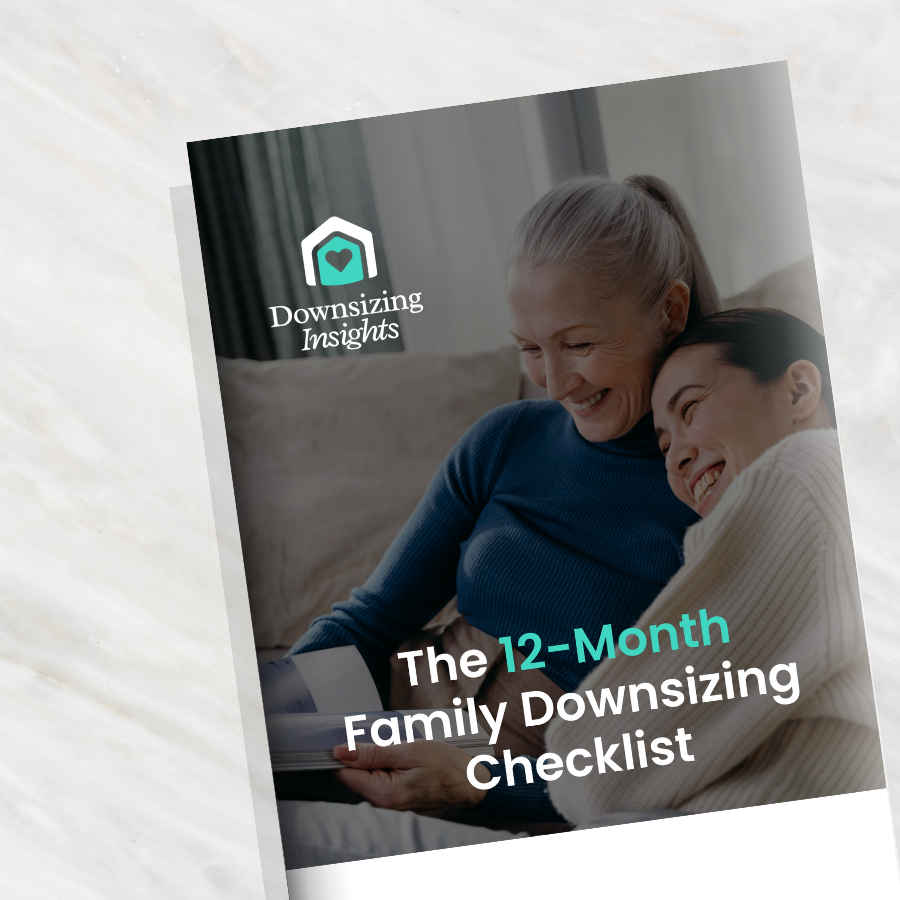
Take your next step forward
You've learned the essentials. Now get the tools to move with confidence and clarity.
.jpg)