
Downsizing Tips for Empty Nesters: A Gentle Guide

Introduction
The first morning after the last child leaves home can feel strangely quiet. Rooms that once overflowed with backpacks, shoes, and laughter now sit still. This is often when many people start searching for downsizing tips for empty nesters, and the mix of relief and sadness can feel heavy.
We see this often. Letting go of a family home is not just a practical step. It touches memories, identity, and the story of a life built over many years. Sorting through bedrooms, holiday decorations, and boxes in the attic can stir up feelings that are hard to predict, and that is completely normal.
“Have nothing in your houses that you do not know to be useful or believe to be beautiful.”
— William Morris
At the same time, downsizing can open the door to a lighter way of living. A smaller home can mean less cleaning, fewer repairs, and more time and money for travel, hobbies, and people. With the right plan, this change becomes less about giving things up and more about shaping a home that fits who you are now.
In this article, we share practical and gentle downsizing tips for empty nesters so the process feels clear and manageable. We walk through the emotional side, simple methods to sort your home, and ways to get support. At Downsizing Insights, we offer free readiness assessments, a 12‑month checklist, and access to caring local experts, and we will show how these tools can steady every step of this transition.
Key Takeaways
Start Early. Giving this process three to six months (or more) makes decisions less rushed. With more time, emotions are easier to handle, and the work can be divided into shorter, calmer sessions.
Know Your Why. A clear personal reason for downsizing guides every choice. Writing down why this matters right now keeps you focused. When decisions feel hard, returning to that reason brings confidence and calm.
Choose A Sorting Style. Two simple methods work well for most people: by room or by category. Pick the style that fits how you think. Donating often moves things out faster than selling and helps other families at the same time.
Get Support. No one has to do this alone. Professional move managers, organizers, and senior real estate specialists can share the load. Downsizing Insights adds another layer of help with a free readiness self‑assessment and a gentle 12‑month checklist you can follow at your own pace.
Why Downsizing Feels So Hard — And Why It Is Worth It

When we sit at a kitchen table with empty nesters, the stories often start in the basement or the attic. There is the box of soccer medals, the prom dress still in plastic, or the chipped mixing bowl that made every birthday cake. Touching these items pulls the past into the present, and it can feel as if each decision is a decision about the memory itself.
Many people feel two very different things at once. There can be excitement about a smaller home, less yard work, and new adventures. At the same time, there can be real grief for the season of life that is closing and for the house that held it. If downsizing feels harder than expected, that does not mean anything is wrong. It means the home has mattered.
We remind our clients that while the square footage is getting smaller, life is not shrinking. Moving to a condo, townhome, or retirement community often brings new friends, easier daily routines, and more freedom to see family. Space on a floor plan may go down, yet space in a calendar and in a mind can go up.
There are also very concrete reasons why downsizing tips for empty nesters are worth following, and research on Study: Where Americans Are facing the most downsizing strain helps illustrate just how widespread this challenge truly is:
- A smaller place often means lower mortgage or rent, reduced property taxes, and smaller utility bills.
- Heating and cooling fewer rooms keeps money in the bank and lowers stress when surprise repairs pop up.
- Fewer surfaces and closets mean less dusting, scrubbing, and sorting, which frees energy for trips, books, or grandkids instead of chores.
A calmer, simpler home often brings clearer thinking. When counters are not stacked and closets are not packed, sleep tends to be better and daily tasks feel easier. Seen this way, downsizing is not just about leaving a house. It is about shaping the next phase of life with more peace and more control.
How To Start – Clarify Your "Why" And Make A Plan

Before a single box is packed, we encourage people to slow down and ask one main question: Why now? Clear downsizing tips for empty nesters always start with that answer. Maybe the goal is lower monthly costs, less yard work, staying safer on one level, or moving closer to grandchildren. Writing this reason in a notebook or on a card keeps it close when choices get hard.
Next, we picture the next home in detail. We ask clients to close their eyes and imagine walking in the front door. How does the space feel? Is it bright and open, or snug and cozy? Where is the favorite chair? Who comes over on a Sunday afternoon? This picture becomes a filter. If an item does not fit that future space or lifestyle, it is easier to bless it and let it go.
Timing matters as well. While some moves happen fast, most people feel calmer when they start early. Many experts suggest beginning to declutter at least three to six months before a possible move. If there is more time, starting one to two years ahead allows for shorter sessions and less pressure. That schedule works well for empty nesters who want to explore options without feeling pushed.
We also suggest learning as much as possible about the new place. Knowing the square footage and room sizes turns vague ideas into clear plans. Sketching a simple floor plan helps decide which sofa, table, or dresser can come along. Settling on the big furniture pieces six to nine months before listing a home gives time to sell or donate extras and makes the house show better.
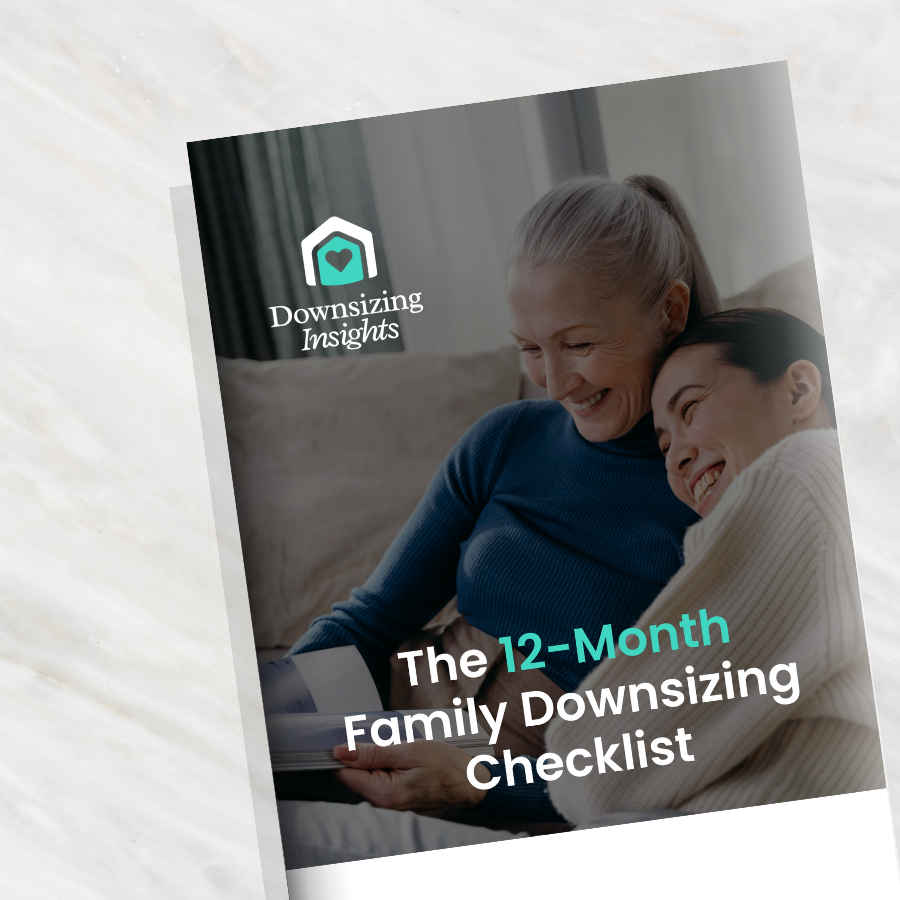
To keep all of this from feeling scattered, we often share the free 12‑Month Downsizing Checklist from Downsizing Insights. It breaks the work into monthly steps, with gentle reminders and simple tips. Paired with our Downsizing Readiness Self‑Assessment, which checks in on emotional, practical, and money questions, it gives a personal roadmap so the process feels guided rather than random.
“The best way to find out what we really need is to get rid of what we don’t.”
— Marie Kondo
Practical Downsizing Tips – Two Methods That Actually Work

Once the reason and plan are clear, the next question is how to begin moving items out of the house. Most of the downsizing tips for empty nesters we share fall into two simple methods. Neither is right or wrong. The best choice is the one that feels less stressful.
One method is to work room by room. This style is helpful for people who like seeing quick visual progress. Many start with easier spaces such as a guest bathroom, the car, or a hallway closet. Then they move to bedrooms, the living room, and the kitchen, saving storage areas and deeply sentimental spots for last. In each room, items are sorted into three groups:
- Keep
- Donate
- Throw away or recycle
The key with this method is to finish each space before moving on. That means taking donation items to the car or drop‑off point and filling the trash and recycling bins before starting another room. When we guide clients in this way, they feel real momentum instead of just shifting piles around. The home starts to look and feel lighter, which brings energy to keep going.
The second method is to work by category instead of by room. This looks a bit like what people see in the KonMari style. All clothing is gathered first from every closet and drawer, then sorted. Next comes books, then paper, then kitchen and household items, with sentimental pieces again saved for last. Seeing every sweater or every baking pan in one spot can be eye‑opening, especially for those moving from a large house to a smaller condo.
Whichever method feels better, a few shared tips make the work smoother:
- Donating items in good condition is often faster and more rewarding than trying to sell everything.
- Selling just a few things that clearly have higher value keeps progress moving while still bringing in some cash.
- Renting a storage unit sounds helpful, yet it often just delays hard choices and adds a monthly bill — a pattern explored in reporting on Moving out means downsizing? and the items Americans leave behind during transitions.
- When emotions run high, bringing in a steady friend, a professional organizer, or a move manager can provide kind, clear feedback and keep the process moving.
These practical downsizing tips for empty nesters turn a large, cloudy task into a series of smaller, doable steps.
How Downsizing Insights Helps You Navigate This Transition

Many empty nesters tell us they feel caught between two thoughts. One is the sense that it is time to make a change. The other is not knowing where to start or who to trust. That stuck feeling is exactly why we created Downsizing Insights and built it around real‑life downsizing tips for empty nesters.
Our platform focuses on the needs of older adults and their families. We begin with gentle tools, not pressure. The free Downsizing Readiness Self‑Assessment lets people check in on how ready they feel in three areas: emotional, financial, and practical. The questions are simple and private, and at the end there is a short summary with suggested next steps.
For those who want a clear plan, our free 12‑Month Downsizing Checklist walks through the entire process step by step. It covers early talks with family, sorting and donating, picking a new place, selling the current home, and settling in. Each stage includes helpful reminders and small tips that come from real client stories.
When someone is ready to talk with a person, we connect them with real estate advisors who specialize in seniors and with move managers who understand both the logistics and the feelings involved. All calls start as free, no‑pressure conversations. Our goal is simple: we want every person to feel supported, informed, and in control of their own timeline.
Conclusion

Downsizing after the kids have left home is not a small choice. It asks a person to look back at a whole season of life and then decide what to carry forward. That takes courage, care, and time. Feeling tender or unsure during this stage is very normal.
With a clear reason, a picture of the next home, and practical methods for sorting, this change becomes far more manageable. Simple downsizing tips for empty nesters, such as starting early, working room by room or by category, and choosing donation over endless selling, keep the process moving without spinning into chaos. The reward is a home that is easier to care for, costs less to maintain, and supports the way life looks now.
We at Downsizing Insights are here to walk beside you, not push from behind. Our free Downsizing Readiness Self‑Assessment and 12‑Month Downsizing Checklist are gentle first steps you can take whenever you feel ready. A calmer, simpler home is within reach, and you do not have to get there alone.
FAQs
When should empty nesters start thinking about downsizing?
We suggest beginning to think about downsizing one to two years before a possible move. That does not mean work starts right away, but early reflection keeps you from feeling rushed later. At a minimum, start active decluttering three to six months before listing a home. Tools from Downsizing Insights, such as the free readiness assessment, are helpful even if a move is still just an idea.
How do I emotionally let go of sentimental items when downsizing?
First, know that this is one of the hardest parts, and nothing is wrong with you for finding it painful. Save sentimental items for the end, when decision skills are warmed up. Many people keep one special item from a group and take photos of the rest, or they write down the story behind a piece before letting it go. A calm friend or move manager can sit with you and offer gentle, steady support.
What are the biggest mistakes to avoid when downsizing?
Common problems include renting a storage unit, which delays choices and adds ongoing cost, and trying to sell every single item, which slows progress and drains energy. Rushing everything into one weekend often leads to regret and fatigue. Skipping the step of measuring the new home can leave you with furniture that does not fit. Trying to handle all of this without any support also makes the process heavier than it needs to be.
Take your next step forward
You've learned the essentials. Now get the tools to move with confidence and clarity.
.jpg)