
What Is a Senior Move Manager? Role, Cost & Benefits

Introduction
Walking into a parent’s house that needs to be emptied can feel like stepping into a maze of memories. Every shelf holds a story, every closet is packed, and every room seems to ask the same thing: How in the world will this all move with care and still be done on time?
When families reach out and ask what a senior move manager is, they are usually asking something deeper. They want to know how to move a loved one without breaking their spirit, their budget, or their backs. It is not only about boxes and trucks. It is about grief, change, and hope all mixed together in one big task.
A senior move manager is a specialist who guides older adults and their families through this kind of move from start to finish. They keep an eye on both sides of the process: the practical details and the emotional weight. In this article, we will walk through who these professionals are, what they do, when it makes sense to hire one, and how to find a good match for a family. Along the way, we will also share how we at Downsizing Insights help people get ready with clear checklists, simple tools, and caring local experts, so this next chapter feels calmer and more in control.
"People will forget what you said, people will forget what you did, but people will never forget how you made them feel."
— Maya Angelou
Key Takeaways
Before going deeper, it helps to see the main points in one quick view. These ideas can act as a simple guide while reading the rest of the article.
A senior move manager is a trained guide for later-life moves. They plan, organize, and stay calm when details feel messy, giving seniors and families a steady person who knows this process well.
Their work goes far beyond lifting boxes or driving a truck. They help with sorting and downsizing in a kind way and map out floor plans so the new place feels safe and familiar.
Hiring this kind of help can protect time, money, and energy for everyone. Adult children do not need as many long trips, and the senior does not have to face piles of items alone.
These services matter most when health, distance, or a very large downsize makes the move harder. A manager keeps the senior’s wishes at the center while lowering stress for the wider family.
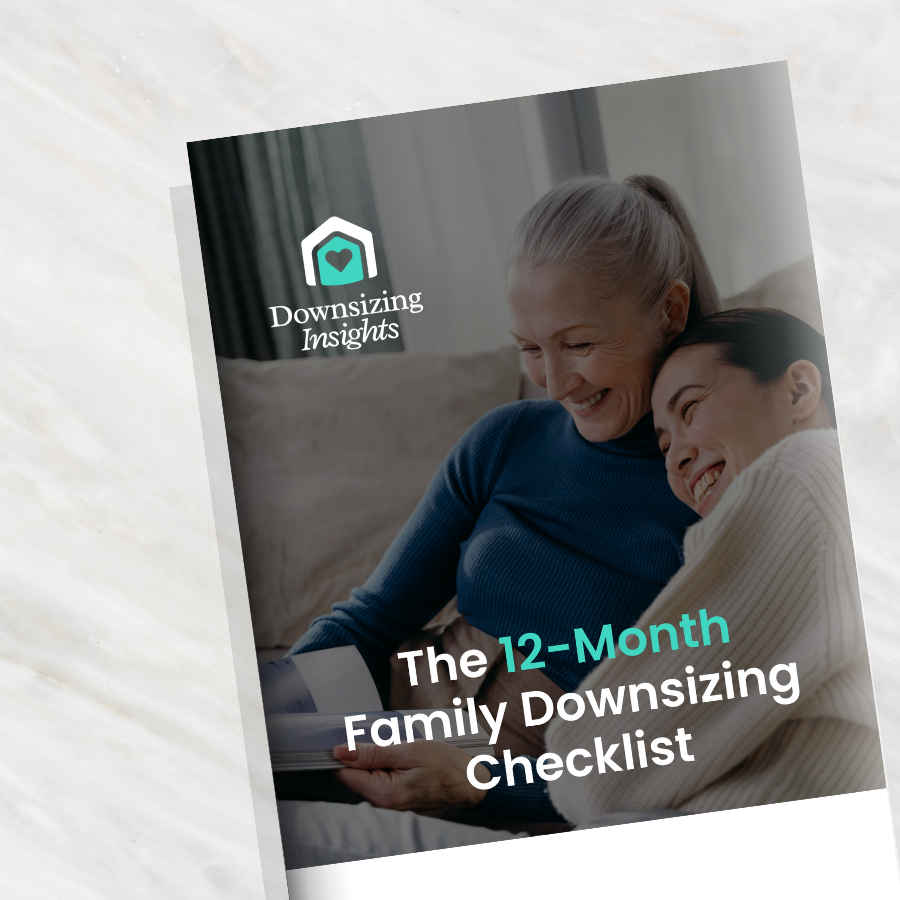
Downsizing Insights offers planning tools and connections with caring local experts. Our free 12 Month Downsizing Checklist and readiness guidance help families know when and how to bring in a senior move manager.
What Is A Senior Move Manager, Exactly

When we think about what a senior move manager does, it helps to picture a steady guide walking beside a family from the first hard talk about moving to the first night in the new home. This role is sometimes called a senior relocation specialist. The focus is the same: older adults and their families get support with the emotional, physical, and planning parts of a move.
Unlike a standard moving company that shows up on one day to load and unload, a senior move manager acts more like a project manager and calm coach. They help set a timeline, decide what will move, and make sure the new space works for the senior’s daily life. Instead of only thinking about furniture and boxes, they pay attention to habits, health needs, and comfort.
Many people in this field come from backgrounds in social work, nursing, psychology, or other forms of care. They know how to listen, not just how to stack boxes, and they understand what it feels like to leave a house that holds decades of birthdays, holidays, and family changes.
There is also an important detail about the title itself. In the United States, Senior Move Manager is a trademarked term for members of the National Association of Senior and Specialty Move Managers (NASMM), and understanding the Senior Move Managers: Role within the broader caregiving landscape helps families know exactly what they are hiring. Members must carry general liability insurance, complete core training in ethics and safety, and follow a strict code of conduct. Complaints can be reviewed by an ethics board, which adds another layer of safety for families.
Other professionals may offer very similar services under names such as senior move specialist or senior move expert. Many are excellent, but they are not part of NASMM. No matter which title someone uses, it is wise to:
- Check references and read reviews
- Ask about training and insurance
- Talk through how they handle emotional moments as well as move day
A move manager becomes a close partner during a tender time, so the right fit matters as much as the resume.
What Services Does A Senior Move Manager Provide

Families are often surprised by how wide the service list is once they learn what is available. A senior move manager does far more than make packing lists. They can step in months ahead of a move or help with just one slice of the work, such as downsizing or move-day oversight. Every plan is shaped around the senior’s pace, budget, and health.
We see the most success when families do not try to carry every task alone. Some choose full start-to-finish support. Others ask for help only with the hardest parts, like deciding what to keep or setting up the new home. Either way, a clear breakdown of services makes it easier to picture how this help fits real life.
Pre-move planning and downsizing cover the early stages. A manager meets with the senior and family to map out goals, timelines, and worries. Together, they sort items into clear groups: keep, give, donate, sell, or discard. When sentimental items fill every shelf, the manager offers gentle ideas, such as taking photos or creating small memory books, so the feeling stays even if the object does not.
Careful floor planning is another key task at this stage. The manager measures favorite furniture and compares it with the layout of the new home. They think about walker or wheelchair use, clear paths at night, and easy access to bathrooms and the kitchen. This planning helps avoid the sad moment when a beloved couch or table will not fit the new space.
Logistics and vendor coordination remove a huge weight from the family. The manager becomes the one point of contact for movers, cleaners, real estate agents, handypeople, and more. Because they work with these vendors often, they know who shows up on time and who treats seniors with respect. This network can also mean better pricing and fewer last-minute surprises.
Move-day and post-move setup focus on keeping stress low when everything is in motion. On the big day, the manager is there to guide the moving crew, answer questions, and protect fragile or important items. In the new home, they unpack, make beds, set up the kitchen, and place familiar photos and lamps first. Many seniors sleep that first night in a room that already feels like home, instead of staring at a wall of boxes.
Beyond relocation support helps when the senior plans to stay in place or when an estate needs to be cleared. Managers can reorganize and declutter a current home to make it safer, with fewer tripping hazards and more open space. They may connect families with estate sale teams, appraisers for special collections, or donation centers. For adult children who live far away, many managers also use video calls so everyone can see items and give input from a distance.
Why Hiring A Senior Move Manager Is Worth It

The price of hiring extra help can cause hesitation. On the surface, it might seem easier to ask family and friends to pitch in. But once people understand why a move manager can ease the process, and see the emotional, time, and money savings that come from working with a senior move manager, they often say they wish they had called sooner.
"Aging is not lost youth but a new stage of opportunity and strength."
— Betty Friedan
Some of the main benefits include:
Emotional support and stress reduction often matter even more than packed boxes. A senior move manager is not caught in old family patterns, so they can stay calm when hard memories or disagreements surface. They listen to stories about wedding gifts, travel mementos, and children’s artwork, and they honor those stories while still helping items move along. Most important, they invite the senior into every decision they can, so the person feels like an active chooser, not a bystander.
Time savings for families add up fast. Adult children juggling work, kids, and long drives cannot always spend weeks sorting closets. A move manager can work in steady blocks, even when family members are in other states. Many use simple photo sharing and video calls so siblings can say yes, no, or later on items without boarding a plane.
Financial benefits often surprise people. Careful downsizing lowers the number of boxes and the size of the moving truck, which cuts costs. Managers know how to group tasks, such as scheduling junk removal and donation pick-ups on the same day, so there is less wasted time. They can connect families with appraisers and estate sale teams who know fair prices for antiques or collections. At Downsizing Insights, we also see big savings when families use our free 12 Month Downsizing Checklist to spread decisions over time instead of rushing in the last week.
Conflict prevention may be harder to measure in dollars, but it matters just as much. Old arguments about who gets what can flare up as soon as packing starts. A senior move manager acts as a neutral guide. They keep the focus on the senior’s wishes, help set simple rules for sharing items, and slow things down when tempers rise. Many families tell us that this outside presence helped them stay connected instead of pulled apart.
How To Find The Right Senior Move Manager For Your Family

Once a family decides to get help, the next question is how to choose the right person. This is someone who will walk through private spaces, hold sentimental items, and listen to tender stories. Taking a little time to choose well can make the entire move feel safer and smoother.
We encourage families to treat this like hiring any other trusted professional. It is wise to ask questions, request clarity on prices, and pay attention to how the senior feels during each meeting. A good match feels calm, kind, and steady, not rushed or pushy.
A smart first step is to look for trained professionals nearby. The NASMM website has a search tool for Senior Move Manager members. Local senior centers, retirement communities, and trusted real estate agents may also know people who focus on senior moves in your area.
Interviewing more than one candidate gives helpful context. Invite your parent or loved one to sit in on the calls or visits. Ask about past projects that sound like your situation, such as long-distance moves or heavy downsizing. Talk about how they handle emotional moments as well as packing days.
It helps to watch for key personal qualities, not just skills. Empathy, patience, and clear speech matter at least as much as checklists. A strong move manager explains each step in plain language and does not make the senior feel rushed or judged. They should also show respect for family wishes, even when they offer other ideas.
A written agreement protects everyone. Ask for a clear outline of services, time estimates, and rates before any work starts. NASMM members are required to provide a written estimate, but it is wise to expect this from any professional you hire.
At Downsizing Insights, we add another layer of support while families search. Our guides, readiness assessments, and free 12 Month Downsizing Checklist help clarify what kind of help is needed and when. We also connect families with caring local experts, including move managers and senior-focused real estate agents, who understand both the practical and emotional sides of these moves.
Conclusion

A senior move is more than a change of address. It is a major life shift that stirs up memories, worries, and hopes for what comes next. No one needs to face that mix of boxes and big feelings alone.
A senior move manager brings order to the details and kindness to the hard parts. With the right partner, a move can feel steady instead of chaotic, and the senior can feel seen and heard at every step. At Downsizing Insights, we believe this next chapter can be planned with care, not panic. Our free 12 Month Downsizing Checklist, readiness tools, and network of local experts give families a clear starting point. When they combine those tools with the hands-on support of a trusted senior move manager, the path from old home to new home becomes far clearer and far less heavy.
FAQs
Even after learning the basics, many families still have a few common questions. These answers cover the points we hear most often when people think about hiring a senior move manager for the first time.
How Much Does A Senior Move Manager Cost
Most senior move managers charge by the hour, and rates vary by location and project size. Research on making the move for older adults confirms that across much of the United States, hourly rates often fall somewhere between $40 and $80, with large cities sometimes higher. Total project costs are usually in the range of $1,500 to $5,000. The exact price depends on the size of the home, how much downsizing is needed, how fast the move must happen, and how many services the family wants.
What Is The Difference Between A Senior Move Manager And A Regular Moving Company
A regular moving company focuses on lifting, loading, driving, and unloading. Their work begins on move day and ends when the truck is empty. A senior move manager, on the other hand, may be involved weeks or months before that day. They help sort and right-size belongings, plan the new layout, hire and direct the movers, and unpack and set up the new home. They are also trained to support the emotional side of a later-life move, which standard movers are not asked to handle.
When Should I Hire A Senior Move Manager
The best time to hire a senior move manager is as soon as a move becomes likely. Early help is especially useful when the senior has health or mobility challenges, when the family lives far away, or when the current home is large and full of decades of items. Calling months ahead gives more time for gentle sorting instead of rushed decisions. It can also ease tension in families where there is past conflict or worry about fairness. When people start early, they usually feel calmer and more steady by the time move day arrives.
Take your next step forward
You've learned the essentials. Now get the tools to move with confidence and clarity.
.jpg)