
This page covers the local picture. The Complete Downsizing Kit covers the rest: six guides, one clear sequence, from finances to the final move. $94 for instant access.
.png)
Downsizing a home you've lived in for twenty or thirty years is not a single decision. It is a string of smaller ones, made over months, about what to keep, where to live next, and how to let go of a house that has held an entire chapter of life. If you are reading this before any of those decisions have been made, that's the right place to start.
Downsizing Insights put this guide together to walk through what downsizing in Alexandria, VA actually involves: the kind of homes people are leaving, the neighborhoods and communities they move toward, what it costs, how Virginia taxes the sale, and the parts of the process that have little to do with real estate at all. Nothing here requires a decision today. It's meant to be read at whatever pace feels right, and returned to as questions come up.
What Downsizing Looks Like In Alexandria

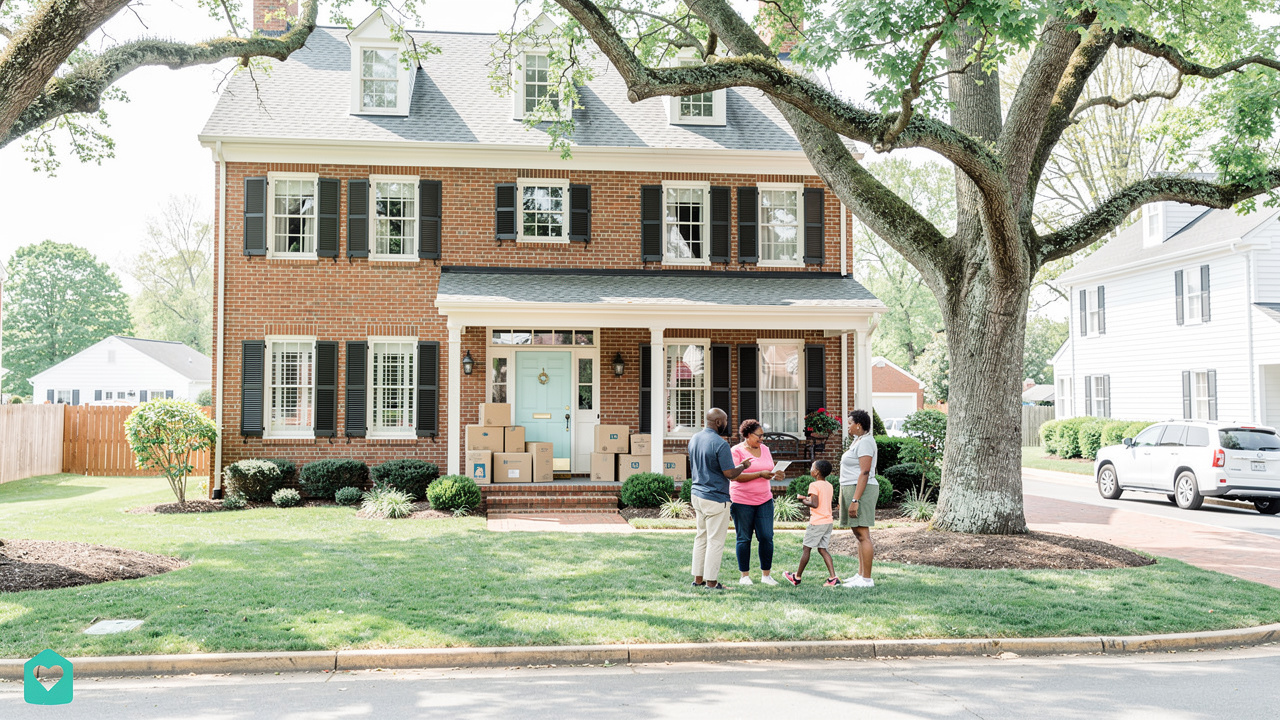
The homes at the center of most downsizing conversations in Alexandria share a familiar profile. They're often four- or five-bedroom colonials or split-levels built between the 1950s and 1990s, sitting on quarter- to half-acre lots in neighborhoods like Rosemont, Beverley Hills, or Seminary Hill. Many run 2,800 to 3,500 square feet, with a finished basement, a two-car garage, and a yard that once hosted a swing set or a garden that took up a full weekend each spring.

Older properties, particularly the Federal-style and Victorian rowhomes in Old Town, bring their own set of considerations: narrow staircases, three or four levels, and systems (roofs, HVAC, plumbing) that are original or close to it. A house that felt manageable at 45 can feel entirely different at 75, when a flight of stairs multiple times a day, or a furnace that needs replacing, becomes less of an inconvenience and more of a genuine obstacle.
Smaller in Alexandria usually means a two-bedroom condo or a compact townhome somewhere between 1,000 and 1,600 square feet. In dollar terms, that typically translates to selling a home in the $875,000 to $1.6 million range and purchasing something between $450,000 and $950,000, depending on the neighborhood and building, a spread that mirrors how researchers have mapped seven levels of the high-end market nationally, from just under $700,000 to well into eight figures. The gap between those two numbers, often $300,000 or more, is a significant part of why downsizing gets serious consideration in the first place.
None of this is about what a person can or can't manage anymore. It's about the physical facts of a specific kind of house: the square footage, the stairs, the age of the systems, and what it takes to keep all of it running.
What Prompts A Move Like This

A handful of factors tend to show up again and again in Alexandria, usually in combination rather than alone.
The house has become more work than it's worth. A roof, a furnace, or a full landscaping overhaul on an older property can run into the tens of thousands of dollars. At a certain point, the cost and effort of maintaining 3,000-plus square feet no longer matches how much of the house actually gets used day to day.
The equity sitting inside the home is substantial. Many Alexandria homeowners purchased decades ago for a fraction of what the property is worth now, sometimes $600,000 to $1.5 million less, and national data likewise shows that even as mega investors retreat from the housing market, individual homeowners and small-scale sellers continue to hold significant, long-accumulated equity. Selling converts that equity into something usable: a paid-off retirement, a cushion for healthcare costs, or simply less financial pressure.
Mobility and daily life have changed. Stairs that were never a second thought become a genuine concern. Proximity to a hospital, a Metro stop, or family members starts to weigh more heavily than it once did. A one-level condo or an elevator building solves a problem that a colonial with three staircases cannot.
These drivers rarely arrive one at a time. A homeowner dealing with a tired HVAC system is often also thinking about how much longer the stairs will be manageable, and how nice it might be to live closer to a grandchild. Recognizing which of these apply, and in what order of importance, tends to clarify what the next home actually needs to offer.
Where People Move From Here

Alexandria offers a fairly wide range of answers to "where next," and most people fall into one of four general paths.
Staying in the city, but smaller. Downsizers who want to remain in Alexandria typically look at condos and smaller townhomes in Old Town, Carlyle, or Eisenhower East, where two-bedroom units run roughly $450,000 to $1.2 million and HOA fees land somewhere between $700 and $1,200 a month. Cameron Station and Potomac Yard offer a middle ground: newer townhomes and mid-rise condos in the $600,000 to $950,000 range, with lower HOA fees (often $200 to $450 a month) and a bit more square footage. The tradeoff is usually walkability versus space: Old Town puts King Street and the waterfront within walking distance, while Cameron Station and Potomac Yard trade some of that urban feel for more room and easier parking.
Moving to the surrounding suburbs. Some downsizers look just outside the city, toward the West End or Landmark area, where older condos and townhomes offer a more affordable entry point, generally $550,000 to $850,000.
Choosing a 55+ community. Alexandria itself has limited age-restricted housing, but communities like Lansdowne Woods, Heritage Hunt, and Regency at Dominion Valley sit 20 to 30 minutes away in Loudoun and Fairfax counties. These typically offer single-level living and built-in amenities, from clubhouses to fitness centers, at price points that vary widely depending on the unit and community. For those thinking further ahead, Goodwin House Alexandria is a local continuing care retirement community, meaning it folds independent living, assisted living, and skilled nursing into one long-term plan.
Leaving the area altogether. A meaningful share of downsizers move away from Alexandria entirely, usually to be closer to adult children or grandchildren in another state. This path tends to involve its own timeline and its own set of questions about a new market entirely, which is worth researching separately once a general direction is chosen.
None of these paths is a default. They simply serve different priorities, walkability, space, amenities, or proximity to family, and the right one depends on which of those matters most.
The Alexandria Market And What Timing Means
Alexandria's single-family market has stayed tight for well-prepared homes in walkable neighborhoods. Homes in the $700,000 to $1.2 million range, the bracket that includes much of Rosemont, Beverley Hills, and Del Ray, typically go under contract within 14 to 28 days when priced appropriately, and inventory has generally run under two months' supply, which favors sellers.
This split reflects a broader national trend, where the luxury and move-up segments of the market have held firm even as investor activity and entry-level demand have cooled, a divide some housing researchers now describe as a k-shaped housing market. Inventory there runs closer to three months' supply, a more balanced condition that gives buyers more room to negotiate. That combination, a tighter market on the sell side and a looser one on the buy side, is part of what makes the math of downsizing work in a homeowner's favor here.
Seasonality plays a role too. Spring listings tend to draw the largest buyer pool, while late fall and winter can mean fewer showings but also less competition among sellers. None of this points to a single correct moment to act. Market conditions are simply one more piece of information, alongside a home's condition, a family's timeline, and personal readiness, that shapes when a sale makes sense.
What Downsizing Actually Costs

Selling a home in Alexandria typically brings total closing costs of roughly 6.5% to 8% of the sale price, once commissions, taxes, and fees are added together. On a $1 million sale, that's somewhere between $65,000 and $80,000 coming out of the proceeds.
A few specific line items are worth knowing in advance:
- Virginia's grantor tax runs $1 per $1,000 of the sale price, and it's customarily paid by the seller.
- The Northern Virginia regional congestion tax adds $0.10 per $100 of the sale price, also typically a seller cost.
- Settlement, title, and recording fees generally add up to $1,200 to $1,500.
- HOA or condo resale package fees, if the property is a condo, run $300 to $500.
Beyond the sale itself, moving and preparation costs add up quickly: professional movers, a pre-listing inspection ($400 to $600), small repairs, fresh paint, and, if applicable, a cleanout or junk removal service for the items not going to the next home.
The most underestimated cost in this whole process is usually the clean-out and preparation phase, not the closing costs. Decades of belongings, an unused workshop, a garage full of tools, or a basement that's become informal storage take real time and often real money to sort through, whether that means a donation pickup, an estate sale, or a dumpster rental. Families who budget for the sale but not for this phase are often surprised by how much it adds to both the timeline and the final expense.
How Virginia Taxes A Downsizing Sale
Moving within Virginia doesn't trigger a new state income tax simply for changing addresses, but a few specific tax questions are worth understanding before listing a long-held home.
Capital gains. The IRS Section 121 exclusion allows a single filer to exclude up to $250,000 of gain on the sale of a primary residence, and a married couple filing jointly can exclude up to $500,000, provided the home was owned and lived in for at least two of the last five years. Homeowners who bought in Alexandria decades ago for $200,000 to $350,000 and are now selling for $1.2 million or more can find themselves with gain beyond that exclusion. Any amount above the threshold is taxed at federal long-term capital gains rates (0%, 15%, or 20%, depending on income), plus Virginia's state income tax rate of 5.75% on the taxable portion.
Cost basis. What counts toward reducing that taxable gain includes the original purchase price plus qualifying capital improvements, additions, remodels, a new roof, HVAC replacements, and similar upgrades made over the years. Routine repairs don't count. Keeping receipts and records from decades of ownership can make a real difference here.
Real estate tax relief. Virginia localities, including Alexandria, offer real estate tax exemptions or deferrals for qualifying seniors and disabled homeowners, generally based on age, income, and net worth limits. These programs vary by year and by locality, so it's worth checking current eligibility directly with the City of Alexandria's Commissioner of the Revenue before assuming a status transfers to a new home.
Because these rules shift with income, home value, and individual circumstances, a Virginia-licensed CPA or tax advisor who works regularly with real estate transactions is the right resource for a specific calculation, ideally consulted before listing rather than after the sale closes.
The Harder Part Of Downsizing
The financial and logistical pieces of downsizing are, in some ways, the more straightforward parts. What's harder to plan for is everything underneath them: the identity wrapped up in a home where children were raised, the fact that one spouse may feel ready to move while the other isn't, and the grief that can surface even when a move is entirely the right decision.
Adult children often carry their own attachment to the family home, and their belongings, yearbooks, trophies, furniture from a childhood bedroom, can become an unexpected source of tension if they haven't been asked to claim or address them ahead of time. It helps to name this directly rather than treat it as something to push through quietly. A move that makes complete financial sense can still come with real sadness, and both things can be true at once.
What tends to help isn't a professional stepping in to fix the feeling, but time. Starting the process early, giving each family member a chance to process at their own pace, and allowing some decisions to sit for a few weeks before finalizing them, tends to lead to fewer regrets than a compressed, deadline-driven sort-through.
Sorting Through Belongings

Most families find it helpful to start sorting belongings three to six months before a home goes on the market, well ahead of any listing deadline. That runway allows for a slower pace: a room a week, rather than a frantic weekend before showings begin.
Adult children are often willing to take specific items, furniture, china, tools, but rarely want everything, and asking directly and early avoids surprises later. For what's left, a few paths tend to cover most situations:
- Estate sale, for a home with a significant volume of furniture, collectibles, or household goods to liquidate at once.
- Consignment, for individual higher-value pieces (furniture, art, jewelry) worth selling separately.
- Donation pickup, for items in good condition that a local charity can collect directly from the home.
- Junk removal, for anything with no resale or donation value that simply needs to be hauled away.
Photographs and documents deserve their own separate pass rather than getting swept into general sorting; many families set aside a weekend specifically for digitizing photos and organizing important papers like deeds, wills, and insurance records before tackling the rest of the house.
The Kinds Of Help Available
Several types of professionals specialize in different pieces of this process, and it's rarely necessary to hire all of them at once.
A Senior Move Manager, often certified through the National Association of Senior Move Managers (NASMM), coordinates the physical and logistical side of a move: planning, sorting, packing, and settling into the new home. Families dealing with a tight timeline or a physically demanding sort-through often find this kind of coordination worth the cost.
A Senior Real Estate Specialist (SRES®) is a real estate agent with additional training focused on the needs of clients over 50, including how to time a sale around a move, work with family dynamics, and communicate at a comfortable pace. You may find it helpful to speak with a few SRES-designated agents in Alexandria before choosing one, comparing not just personality but their recent track record in your specific neighborhood.
Professional organizers, often affiliated with the National Association of Productivity and Organizing Professionals (NAPO), specialize in the decluttering and sorting phase itself, which can be the most emotionally taxing part for many families.
For the financial side, a CPA familiar with Virginia real estate transactions can walk through capital gains exposure and cost basis calculations specific to a long-held home, and a local moving company experienced with senior relocations can handle the physical transport with more patience and care than a standard mover might offer.
The table below offers a quick reference for matching a need to the right kind of help:
There's no requirement to bring in every one of these at once. Many families start with just one, a real estate agent or an organizer, and add others as the process reveals what's actually needed.
Frequently Asked Questions
When is the right time to downsize in Alexandria?
There's no single answer, but it often becomes clearer when home maintenance starts outweighing the benefit of the space, or when stairs and upkeep shift from mildly inconvenient to genuinely difficult. Starting the conversation before a health event or a major repair forces the decision tends to leave more options on the table.
How long does downsizing typically take from decision to move-in?
Most Alexandria families spend five to nine months moving from the first serious conversation to settling into a new home, factoring in decluttering, home preparation, the sale itself, and the search for the next place. Compressing that timeline is possible but usually adds stress on both the sorting and the selling side.
Should I declutter before or after listing my home?
Decluttering before listing generally works better. A home with fewer belongings tends to photograph more clearly and show better to buyers, and it also means less to sort through during the actual move. Most families find a three- to six-month head start on sorting makes the pace far more manageable.
How do I find a real estate agent experienced with senior transitions in Alexandria?
The SRES® directory on realtor.org lists agents with training specific to older adult clients and can be filtered by location. Beyond the credential, it's worth having a direct conversation about the agent's recent experience in your specific Alexandria neighborhood, whether that's Rosemont, Del Ray, or Old Town.
What HOA fees are typical for an Alexandria condo?
HOA fees generally range from $400 to $1,200 a month depending on the building and amenities. Older buildings in Old Town without elevators or extensive amenities tend to run lower, while newer mid-rise buildings with concierge service, parking, and fitness facilities run toward the higher end.
Will I owe capital gains tax on a home I've owned for decades in Alexandria?
It depends on how much the home has appreciated relative to the IRS Section 121 exclusion, $250,000 for a single filer or $500,000 for a married couple filing jointly. Homes purchased decades ago for a fraction of today's value can generate gain above that threshold, which is why a conversation with a Virginia tax professional before listing is worth having.
Is it worth hiring a Senior Move Manager or professional organizer?
For many families, yes, particularly if the sorting process feels overwhelming or a tight timeline is involved. Whether it's the right call depends on how much family support is available and how much of the process feels manageable without outside help.
What's the best neighborhood in Alexandria to downsize into?
It depends on what matters most. Old Town and Carlyle offer walkability and urban energy, Cameron Station and Potomac Yard offer more space and lower HOA fees, and communities outside the city offer single-level living and amenities that Alexandria proper doesn't have much of.
Where To Start, Without Committing To Anything
Nothing about reading this guide requires a decision by any particular date. A reasonable next step, if one feels right at all, is simply getting a sense of what a current home might be worth and what a smaller place in a given neighborhood tends to cost, a number to plan around, not a step that locks anyone into a listing or a moving date.
From there, the pace is entirely up to the household involved. Some families spend a year gathering information before making a single call. Others move faster once a direction feels clear. Downsizing Insights exists to make the early information easier to find, not to push the timeline in either direction. Whatever comes next, it doesn't have to be decided today.
Take your next step forward
You've learned the essentials. Now get the tools to move with confidence and clarity.
.jpg)