
Continuum of Care Communities: Guide for Families

Choosing where an aging parent, partner, or even you yourself should live next can feel heavy and confusing. Continuum of care communities often sit right in the middle of that decision.
The stakes feel high because nobody wants to guess wrong or rush during a health scare. The options can blur together, especially if this is the first time your family has faced it.
Continuum of care communities are senior living settings where a person can move in once and stay on the same campus as needs change, instead of bouncing between different facilities. In this guide, we explain what these communities are, the four levels of care, how contracts and costs work, and how to start visiting places in a calm, steady way. If you want a clearer starting point, keep reading.
Key Takeaways
Continuum of care communities keep housing, services, and health care on one campus so a resident can stay put as care needs increase. This model is often called a Continuing Care Retirement Community (CCRC) or life plan community. The basic promise is fewer disruptive moves during already stressful health events.
There are four main care levels: independent living, assisted living and rehab, skilled nursing, and memory care. Daily life shifts slowly from doing almost everything alone to having more hands-on support. Knowing these stages helps families talk honestly about what support a loved one may need next.
Contracts and costs are significant. These communities can bring real stability for some families, but they also come with high costs and long agreements. Entrance fees often rely on selling a longtime home, which adds emotional weight. Starting research early and asking direct money and care questions can make the choice feel more thoughtful and less rushed.
What Is A Continuum Of Care Community?

A continuum of care community is a senior living neighborhood where housing, services, and health care all sit in one place. In most continuum of care communities, residents move in while they are fairly independent and then receive more help over time without leaving the campus. This setup is often called a Continuing Care Retirement Community (CCRC) or a life plan community.
Instead of separate moves to independent living, then assisted living, then a nursing home, all those settings sit within one community. According to LeadingAge, there are about 1,900 CCRCs in the United States, so this is a known and regulated model, not a rare experiment. Research from the National Investment Center for Seniors Housing and Care shows that the average new CCRC resident is in their early eighties, though many people start looking earlier.
The basic design is simple:
- A person moves into an independent living apartment or cottage.
- If walking, memory, or medical needs increase later, staff helps them move to assisted living, skilled nursing, or memory care in another building on the same campus.
- Couples often say this matters most when one partner needs more help than the other, because they can still see each other easily.
Emotionally, the promise of “move once” can feel like a relief, especially for families who have already watched a parent move in a hurry after a fall or hospital stay. Downsizing Insights often hears from adult children who want to avoid another crisis move like that. Understanding how continuum of care communities work gives families more room to plan, talk, and make choices that match their real lives.
Tip from Downsizing Insights: Before touring, write down what “a good day” looks like for your loved one now. Use that picture as a guide when you compare communities.
What Are The Four Levels Of Care And What Do They Actually Involve?

The four levels of care in these communities show how daily support increases when health needs change over time. Each level shapes what mornings, meals, and evenings look like for your loved one. Knowing the basics can help you match what you see on a tour with what your family member lives with at home right now.
Independent living is usually the starting point for residents who move into continuum of care communities. A person has their own apartment, cottage, or small home, and they still manage their schedule, hobbies, and social life. Housekeeping, maintenance, and often at least one daily meal come with the package, which lightens the load. Research from the National Institute on Aging links strong social connection in later life with better physical and emotional health, and many residents find that in classes, clubs, and shared meals.
Assisted living steps in when daily tasks start feeling harder or less safe. Staff members help with bathing, dressing, medications, and sometimes getting to meals or activities. The goal is not to take over every part of life, but to fill in the gaps so a resident can stay as independent as possible. Rehabilitation services like physical or occupational therapy may also be nearby on campus, which can shorten recovery after surgery or a fall.
Skilled nursing care is for residents who need round-the-clock medical attention. This might follow a stroke, a major surgery, or a serious illness that needs licensed nurses on duty at all hours. The setting looks more like a medical unit, but within a CCRC it still connects to the larger community. Families often appreciate that they can visit a parent in skilled nursing and then walk back to their own apartment or another building five minutes away.
Memory care supports people living with Alzheimer’s disease or other forms of dementia. These units are designed for safety, clear routines, and calm spaces that reduce confusion. Staff receive extra training in communication and behavior changes that come with memory loss. Many families say having this option on the same campus lets them breathe a little easier, even if their loved one never needs to use it.
Most CCRCs ask new residents to enter at the independent living level. That means timing matters. Waiting until someone already needs a lot of daily help can sometimes make them ineligible to move in, which is one reason families start talking about these options earlier than feels urgent.
How Transitions Between Care Levels Actually Work
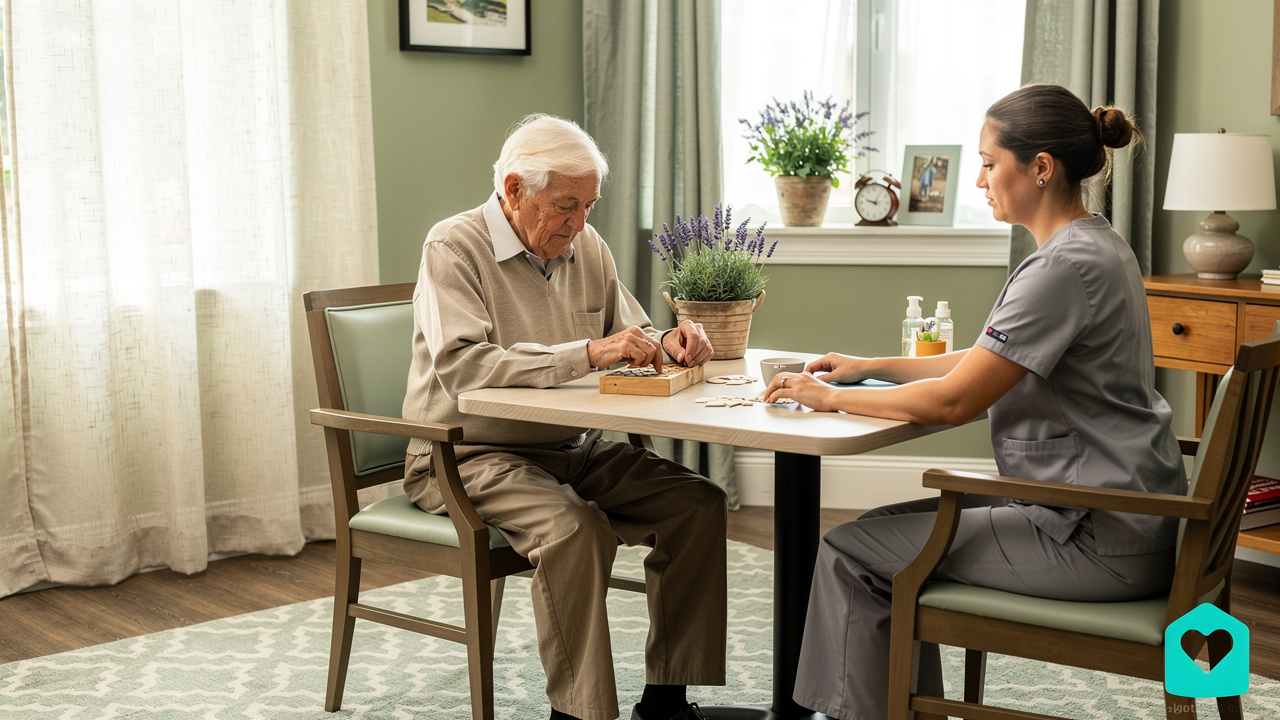
Transitions between care levels in a continuum of care community follow medical assessments, family input, and space within each building. They are planned steps, not automatic switches that flip the first time someone needs extra help.
Usually, a nurse or care team completes an assessment and shares what they see changing in the resident’s health or daily abilities. Families can:
- Ask questions about what has changed.
- Share what they notice at home or on visits.
- Talk through what a move would mean for visits, routines, and cost.
Sometimes staff members feel a higher level of care is needed before the resident or family feels ready, which can stir up strong feelings.
Moves also depend on whether a bed or apartment is open in the next level of care. That means a move is not always instant. During a visit, asking how this process works in that specific community, and who makes final decisions, can give you a clearer picture than a brochure can.
Tip: Ask the care team to walk you through a recent example (with names removed) of how they handled a move between levels. Concrete stories reveal more than general promises.
What Are The Real Costs And What Does A CCRC Contract Actually Mean?

The real costs of continuum of care communities include a large entrance fee, ongoing monthly fees, and the long contract you sign. These contracts explain what happens if your care needs change, what is included in your monthly bill, and how much risk stays with you.
Entrance fees often range from the low hundreds of thousands of dollars into the high hundreds of thousands, depending on location and unit size. Monthly fees commonly fall between three and seven thousand dollars. AARP reports that many families use the sale of a longtime home to help pay these fees, which ties senior living choices directly to the downsizing process.
Most contracts fall into four main types. The names may sound technical, but the ideas behind them are clear:
Type A (extensive or full life care) has the highest entrance and monthly fees. In exchange, most future care in assisted living, skilled nursing, or memory care is prepaid. This can steady long-term costs for people who want predictable bills and have the assets to support a higher upfront commitment.
Type B (modified life care) usually has a mid-range entrance fee. Some care is prepaid, but not all of it. When a resident needs a higher level of care, their monthly bill may rise, but they still receive a partial discount compared with full market rates. Families who want some cost protection, but not the highest fees, often consider this option.
Type C (fee for service) generally comes with the lowest entrance fee. Monthly charges stay lower while someone is in independent living, but later care in assisted living or skilled nursing is billed at market rates. This works best for people with strong financial reserves or long term care insurance who are comfortable taking on more risk.
Type D (rental style contracts) skip the entrance fee entirely in some communities. Residents pay a monthly rent and then pay separately for any care they use. This avoids a large upfront commitment, but it also makes future costs harder to predict if care needs grow.
It is important to know that Medicare covers certain medical services, but not room and board. The Centers for Medicare and Medicaid Services explains that housing, meals, and personal care in a CCRC are private costs, even when some skilled care is covered under Medicare rules.
Because the numbers are large and the contracts are long, many families meet with a financial advisor before signing anything. Downsizing is rarely just a real estate decision. It usually includes:
- Sorting through decades of belongings.
- Talking through family opinions and expectations.
- Deciding what kind of support feels right, both now and later.
Downsizing Insights offers free real estate consultations and city-specific downsizing guides so families can connect the sale of a current home with the realities of these contracts, without sales pressure.
Tip from Downsizing Insights: Ask an advisor to run “what if” scenarios for you—such as a short stay in skilled nursing versus a long stay—so you see how different contract types could affect your savings over time.
How Do You Actually Start Evaluating A Continuum Of Care Community?

Evaluating continuum of care communities starts with visiting a few campuses, asking direct questions, and noticing how each place feels. You do not need a color-coded binder to begin. You only need:
- A short list of questions that matter to your family.
- Enough time to listen to the answers and walk around.
Before or after tours, you can look up each community through your state’s Department of Health website. The Administration for Community Living also runs a Long Term Care Ombudsman Program in every state that helps residents and families address concerns in senior living settings. Knowing that independent oversight exists can add another layer of comfort as you compare options.
When you visit, written questions can keep you from freezing in the moment — and understanding what makes community-based initiatives succeed, as explored in The Reality of Vital communities study, can sharpen what you look for on each tour. These are a few that tend to reveal more than general marketing talk:
Ask what happens if a resident runs out of money while living there — research on Empowering Residents Through Relational ministry models shows how some communities build long-term resident relationships and support systems that extend beyond financial arrangements. Some nonprofit communities offer benevolence care that lets people stay, while others do not. Listening to this answer tells you how the community thinks about long relationships with residents.
Ask what triggers a move from independent living to assisted living, or from assisted living to skilled nursing. Ask who makes that call and how the family is involved. Clear, respectful answers here often signal how communication will feel when health issues appear.
Ask whether the entrance fee is refundable, and if so, on what schedule. Some contracts refund a portion to the resident or their estate, while others do not. The details affect both future planning and how siblings may feel about the decision.
Ask how often monthly fees have increased over the past five to ten years. Steady, explained increases are one thing, and sharp jumps without context are another. This history can help you think through long term affordability more clearly.
Downsizing Insights offers a free Readiness Self Assessment that helps families see where they stand emotionally, financially, and practically before they start touring. Many people use it to sort out whether now is the time to move or whether they need more conversations first. Our downsizing checklist and move management guidance can also help when a family decides that selling a longtime home to fund a move into a CCRC is the right next step, at their own pace.
Tip: Bring a small notebook or use your phone to jot down notes after each visit—rate the food, staff friendliness, cleanliness, and how residents seemed. Those quick impressions are easy to forget later.
The Bottom Line
The bottom line on continuum of care communities is that they offer stability, one campus, and built-in access to higher care. They can spare families from repeated, rushed moves every time health changes. At the same time, they ask for a major financial commitment and a willingness to leave a familiar home.
For some people, staying in place with in-home support will feel better. For others, a move to a smaller condo near family will be enough. Continuum of care communities sit beside those options as one path that trades flexibility for long term steadiness.
Conclusion
If you remember only a few points, let them be these:
- You do not have to decide on continuum of care communities quickly.
- There is no single “right” answer for every family.
- Starting conversations early and asking clear questions can lower stress.
Using tools from places like Downsizing Insights to organize your thinking can make a complicated season feel more steady and human.
Frequently Asked Questions
The frequently asked questions on continuum of care communities tend to focus on how they differ from other retirement options, what happens financially, and when to start looking. Each answer here stands on its own, so you can read only what matches your current worry and still gain clarity.
Question: What is the difference between a CCRC and a regular retirement community?
A CCRC combines housing with multiple levels of care on one campus, while most retirement communities offer only independent living. In a typical retirement community, a resident must move elsewhere if they later need assisted living or nursing care. In a continuum of care community, those higher levels usually sit on the same grounds, which can make changes in health less disruptive.
Question: What happens if a CCRC resident runs out of money?
Some CCRCs, often nonprofits, have benevolence programs that help long term residents stay even if their funds are gone. Others expect residents to leave or switch to a different payer source. Because policies vary widely, families should ask this question directly during tours and read the contract language closely with a trusted advisor.
Question: Is a continuum of care community the same as a nursing home?
No, a nursing home refers specifically to skilled nursing care, which is just one level inside many CCRCs. Continuum of care communities also include independent living, assisted living, and often memory care. Modern skilled nursing units inside CCRCs usually aim for a more home-like, dignity-focused feel than the old style institutions many people picture.
Question: Can a couple stay together in a CCRC if they have different care needs?
Yes, keeping couples close even when their care needs differ is a common strength of continuum of care communities. One partner might remain in independent living while the other moves to assisted living or skilled nursing on the same campus. Daily visits become simple walks instead of long drives, which often eases stress for the healthier partner.
Question: When is the right time to start looking at continuum of care communities?
Most residents move into CCRCs in their early eighties, according to data summarized by the National Investment Center for Seniors Housing and Care. Financial planners and senior housing advisors often suggest exploring options earlier, while a person still qualifies for independent living. That timing creates space for a considered decision instead of one made during a medical crisis.
Take your next step forward
You've learned the essentials. Now get the tools to move with confidence and clarity.
.jpg)